Skip to content

Happy Pride month everyone! To discuss what Pride month is all about, here is our monthly comic.

Page 1, Panel 1
Narration: On June 28th 1969, the New York Police department conducted a raid on the Stonewall Inn, a gay bar (1). 
Image: The Stonewall Inn is shown, a brick bar with windows full of pride flags. The flags shown include the pride flags for asexuality, bisexuality, transgender, pansexual progress and the classic rainbow flag.
Narration: While raids were not uncommon, this time the patrons decided to fight back. The ensuing riot would go on to be called the “Stonewall Riots” or the “Stonewall Uprising.”
Image: Famous figures from the riots including Sylvia Rivera (she/her), Miss Major (any pronouns)  and Marsha P. Johnson (she/her)
Text Near Image: Trans and gender-non conforming people of color were some of the central figures of the uprising (2).
Page 1, Panel 3:
Narration: A year after the riots, the first Pride marches were held in New York, Chicago and Los Angeles (1) This would mark the beginning of Pride and ever since, Pride month has taken place in June ever since (3).
Image: A pride parade is shown with a variety of marchers with various pride flags including the non-binary flag, the progress pride flag, the transgender pride flag, and the bisexual pride flag.
Page 1, Panel 4:
Image: Rebecca, in her queer pride vest, which includes a lesbian pride button..
Rebecca: “So what is Pride Month? Pride holds a lot of different meanings for a lot of different people.
Page 1, Panel 5: But the main idea is to celebrate the contributions and impacts of queer people throughout history, 
Image: Audre Lorde, a Black woman with her hair in an afro (she/her) and Harvey Milk (he/him) a white man wearing a suit and tie are shown. 
Bottom Text: Audre Lord (she/her), writer, civil rights activist, intersectional feminist (4) and Harvey Milk (He/ Him) first openly gay man elected to public office.

Page 1, Panel 6
Narration:Mourn those lost due to violence and discrimination 
Image: The AIDS quilt on the Washington national mall.
Page 1, Panel 7: 
Narration: and advocate for the rights of queer people everywhere. 
Image: Two protest signs are shown. One has the transgender flag and says “Trans rights are human rights.” The other has a speech bubble that says “Say Gay.”
Page 1, Panel 8:
Narration: Historically, queer people were often forced to live their lives in secrecy, less they face violence or even death. Their accomplishments were often ignored or uncredited. Pride month aims to recognize those things (6, 7. 8. 9).
Image: Four little panels exist here showcasing queer people in history. They are as follows:
Lynn Conway (She/her), computer pioneer is drawn in front of a circuit board background. She is a white woman with blonde/grey hair.
Sally Ride (she/her), First US Woman in Space is drawn in her astronaut suit so we cannot see her face, holding a pride flag.
Bayard Rustin (he/him), Civil Rights Leader, is shown giving a speech at a podium. He is a black man with a mustache and greying hair, wearing a formal suit.
Alan Turing (he/him), Father of Computer Science, is shown on a computer screen. He is a white man with brown hair.
Page 2 Panel 1:
Narration: With that basic history out of the way, I want to focus on queer people in relation to medicine
Image: The rod of asclepius is shown (a common medical symbol), with a the snake holding pride flags in its mouths.
Page 2, Panel 2
Narration: Queer people and modern medicine have had a contentious relationship.  Homosexuality wasn’t removed from the DSM until 1973. “Gender Identity Disorder” wasn’t replaced until 2013 (10)
Image: John Fryer and his story
Image caption: John Fryer was a psychiatrist who testified to the APA about being gay. To hide his identity, he wore a Nixon mask (11).
Page 2, Panel 3
Narration: When the AIDS epidemic hit, the U.S government lagged due to the disease 1st primarily impacting queer men.
Image: A skeleton wearing a bow tie speaks out to the audience at a podium.
Skeleton” What’s AIDS?”
Off Panel Reporter: Over a third of them have died. It’s known as the “gay plague”
Laughter is shown between this speech bubble and the next one.
Off panel reporter: No it is. I mean it’s a pretty serious thing that 1 in 3 people that get this have died and I wonder if the president is aware of it?”
Skeleton: I don’t have it, do you?
More laughter is shown.
Bottom caption:This really happened but it was said by Press Secretary Larry Speaks at a 1982 press briefing (12)
Page 2, Panel 4:
Narration:  Queer people were left to take care of their own and activists had to push for the government to respond.
Image: A bunch of buttons are shown, the main one being the “silence=death” button of Act Up. Other queer rights buttons are shown in the background
Page 2, Panel 5: 
Narration:Things have improved since (re. HIV), but queer people still face plenty of issues interacting with the medical system.
Image: A parody of super mario where a figure that looks like mario looks towards a doctor. The doctor says “Sorry. Your access to healthcare is in another castle”

Page 2, Panel 6: 
Narration: Part of this is due to stigma. There are ugly stereotypes about queer people that exist to this day.
Image: Two figures talk to one another. The first looks frustrated while the second offers advice.
Shorter Figure: “So I told her I’m Ace and she was like “there’s an injection that can fix that” Like no!”
Taller Figure: “Next time just say you’ve taken a vow of celibacy: my doc thinks I’m a practicing jedi monk.”
Page 2, Panel 7:
Narration: And sometimes providers will refuse to provide care or even see queer people
Image: Woman
Woman:”Ever since a doc turned me away for my “lifestyle” I dress super fem when going to a medical appointment.”
Page 2, Panel 8:
Narration:Transgender folks in particular can face obstacles especially if they wish to pursue medical transition. 
Image: Woman with glasses
Woman: “When my sister wanted breast enlargement it was no big deal, but when I want it, it’s suddenly a political issue.”
Page 3, Panel 1: Transgender folks also have problems finding providers who know how to work with trans patients and their bodies in general. 
Image: A trans man stands at a gynecological office. A bulletin board labeled “our happy moms” is in the background.. The man speaking to the receptionist looks deeply uncomfortable.
Receptionist: Sir, it’s sweet you came with her, but I need your wife to check herself in. 
Man: Uhh
Page 3, Panel 2: The tendency for medical professionals to focus on transgender patients' gender instead of their chief complaint even has a name: “transgender broken arm syndrome (13).” 
Image: A woman stares into the camera. Her arm is in a cast. 
Woman: Last time I checked, my gender didn’t trip me during basketball practice.
Page 3, Panel 3 While I’d like to say these issues are getting better, there have been recent setbacks that have limited access
Image: A patient stands in front of a giant mountain top with a storm. On the top of the mountain it says “care” 
Patient: Aw, man
Page 3, Panel 4: There are some forces that seek to shove queer people back in the closet regardless of the cost. 
Image: A figure pushes Rebecca back into a closet. 
Figure: Nothing to see here!
Rebecca: Let me out!
A body of text on a dark background: This can harm or even kill people. Transgender men are less likely to get regular pap smears, which can help detect cervical cancer (14). Queer "youth are 5-8 times more likely to experience suicidal ideation (15)" Queer people were twice as likely to report discrimination during a healthcare visit  (16).
Page 3, Panel 6: 
Image: Rebecca is shown lighting a match from inside the closet 
Rebecca: That’s why pride is so important. It’s our way of saying “we’re still here.” That no matter how much people try to hide us out of sight, or stop us from existing altogether, that we’re still here.
Page 3, Panel 7: 
Narration:That we’ve always been here. And that’s well continue to be here, with their approval or not. 
Image: The various characters from throughout the comic are in a crowd collectively wearing different colors of the pride flag.
Crowd: “We’re here and we’re queer”

Page 3, Panel 8: 
Narration: So happy pride to those who existed before us, those of us who exist now and those who will come after us. For those who stand with us. May we be the light to guide everyone into a brighter future and a better tomorrow.
Image: Two figures one wearing the trans flag march in the pride parade holding hands. On the street in chalk the words “there is still time” are written which come from the movie “I Saw the TV Glow.”

Works Cited:

  1. Sopelsa B, Leal, I. It’s officially Pride Month: Here’s everything you should know about the global LGBTQ celebration. NBC News. June 1, 2024. Accessed June 4, 2025. https://www.nbcnews.com/nbc-out/nbc-out-proud/lgbtq-pride-month-june-history-stonewall-what-know-rcna154940
  2. Today in History - June 28. Library of Congress, Washington, D.C. 20540 USA. Winter 2023. Accessed June 4, 2025. https://www.loc.gov/item/today-in-history/june-28/
  3. Sopelsa, Brooke, Leal, Isabella. It’s officially Pride Month: Here’s everything you should know about the global LGBTQ celebration. NBC News. June 1, 2024. Accessed June 4, 2025. https://www.nbcnews.com/nbc-out/nbc-out-proud/lgbtq-pride-month-june-history-stonewall-what-know-rcna154940
  4. Lorde JWJ “J” W is a staff writer for the magazine T spent the summer researching the prismatic afterlives of A, Durham traveled to, N.C., Biographer TST with HN, Gumbs the poet AP. The Afterlives of Audre Lorde. The New York Times. https://www.nytimes.com/2024/08/22/magazine/audre-lorde-biography-legacy.html. August 22, 2024. Accessed June 4, 2025.
  5. Harvey Milk: Messenger of Hope | SFO Museum. Accessed June 4, 2025. https://www.sfomuseum.org/exhibitions/harvey-milk-messenger-hope
  6. Moore NC. The legacy of Lynn Conway, chip design pioneer and transgender-rights advocate. Michigan Engineering News. June 11, 2024. Accessed June 4, 2025. https://news.engin.umich.edu/2024/06/the-legacy-of-lynn-conway-chip-design-pioneer-and-transgender-rights-advocate/
  7. Boyle, Alan. Why Sally Ride waited until her death to tell the world she was gay. NBC News. July 25, 2012. Accessed June 4, 2025. http://www.nbcnews.com/sciencemain/why-sally-ride-waited-until-her-death-tell-world-she-908942
  8. Briggs J. Bayard Rustin: Still Speaking Truth to Power. Vanity Fair. March 24, 2025. Accessed June 4, 2025. https://www.vanityfair.com/style/story/bayard-rustin-still-speaking-truth-to-power
  9. Loeffler J. Alan Turing: The Nazi-Fighting Computer Genius Betrayed by His Country. Interesting Engineering. March 2025. Accessed June 4, 2025. https://interestingengineering.com/science/alan-turing-the-nazi-fighting-computer-genius-betrayed-by-his-country
  10. Winterhalter E. How LGBTQ+ Activists Got “Homosexuality” out of the DSM. JSTOR Daily. May 26, 2021. Accessed June 4, 2025. https://daily.jstor.org/how-lgbtq-activists-got-homosexuality-out-of-the-dsm/
  11. Eugenios J. “I am a homosexual. I am a psychiatrist”: How Dr. Anonymous changed history. NBC News. May 2, 2022. Accessed June 4, 2025. https://www.nbcnews.com/nbc-out/out-news/-homosexual-psychiatrist-dr-anonymous-changed-history-rcna26836
  12. Lawson R. The Reagan Administration’s Unearthed Response to the AIDS Crisis Is Chilling. Vanity Fair. December 1, 2015. Accessed June 4, 2025. https://www.vanityfair.com/news/2015/11/reagan-administration-response-to-aids-crisis
  13. Wall CSJ, Patev AJ, Benotsch EG. Trans broken arm syndrome: A mixed-methods exploration of gender-related medical misattribution and invasive questioning. Soc Sci Med. 2023;320:115748. doi:10.1016/j.socscimed.2023.115748
  14. Gatos KC. A Literature Review of Cervical Cancer Screening in Transgender Men. Nursing for Women’s Health. 2018;22(1):52-62. doi:10.1016/j.nwh.2017.12.008
  15. Russon J, Washington R, Machado A, Smithee L, Dellinger J. Suicide among LGBTQIA+ youth: A review of the treatment literature. Aggression and Violent Behavior. 2022;64:101578. doi:10.1016/j.avb.2021.101578
  16. LGBT+ People’s Health Status and Access to Care - Issue Brief - 10171. KFF. June 30, 2023. Accessed June 4, 2025. https://www.kff.org/report-section/lgbt-peoples-health-status-and-access-to-care-issue-brief/
  17. Jacobs M. The Complex Ending of ‘I Saw the TV Glow,’ Explained. Vanity Fair. May 17, 2024. Accessed June 4, 2025. https://www.vanityfair.com/hollywood/story/ending-of-i-saw-the-tv-glow-explained

Intersex-Inclusive Progress Pride Flag
Image by Neo_Artemis from Pixabay

As Pride Month 2024 draws to a close, we want to take this opportunity to look back at some of our favorite LGBTQ+ blog posts. Whether you’re new to Himmelfarb Library or have been following our blog for years, this retrospective look at Himmelfarb’s Pride posts can serve as an opportunity to reflect on the history of Pride, celebrate the progress that’s been made towards LGBTQ+ equality and those who have fought for this progress, and recommit to the work that still needs to be done.

LGBTQ+ History

Most people don’t associate October with Pride Month, but October is LGBTQ History Month. In an October 2023 post titled The History Behind LGBTQ History Month, we took a look at the history behind LGBTQ History Month starting from its origins in 1994 when high school history teacher, Rodney Wilson addressed a lack of LGBTQ representation in school curriculum and worked with organizations such as the Human Rights Campain to have LGBTQ History Month recognized at the national level. October has additional significance within the LGBTQ community as the first March on Washington for Lesbian and Gay Rights took place in October of 1979, and a second March on Washington took place on October 11, 1987. In 1988, October 11th was recognized as National Coming Out Day. If you’d like to learn more about the 1979 and 1987 March on Washington for Lesbian and Gay Rights, read the full post!

LGBTQ+ Profiles

At GW, we are lucky to have many influential members of the LGBTQ+ community who have been members of our faculty for many years! We’ve profiled some prominent GW faculty and one prominent national figure on our blog.

Picture of Dr. Deyton and Dr. Fauci standing in front of a GW Medicine & Health Sciences logo.
(GW SMHS Facebook Page, 2017)

In June 2021, we posted a piece titled “Just Speak:” Lawrence “Bopper” Deyton. This in-depth profile of Dr. Deyton explores an influential experience Dr. Deyton had as a patient that would have a profound impact on the course of his career and inspire him to work to be a positive influence for change within the field of medicine and healthcare for his entire career. In 1978, Dr. Deyton co-founded what is now Whitman-Walker Health as “a health clinic for gay men and lesbians before AIDS redefined everything and the clinic became a hub for HIV treatment” (Sullivan, 2011). After attending medical school at GW and completing his residency at the University of Southern California Los Angeles County Medical Center, Dr. Deyton began working at the NIH, where he became friends with Dr. Anthony Fauci, and together they would play a crucial role in HIV/AIDS research during the early 1990s epidemic. Dr. Deyton was instrumental in overseeing the “clinical research on the development and approval of antiretroviral drugs and treatment strategies, including the first trials of combination therapies, the cornerstone of current HIV treatments” (GW SMHS, 2017). Read the full post to learn more about Dr. Deyton’s fascinating and impactful career!

Picture of Dr. Carlos Rodriguez-Diaz.

In September of 2021, we posted a profile titled Dr. Carlos Rodriguez-Diaz: Aim for What You’re Passionate About. In this post, Dr. Rodriguez-Diaz discusses what inspired him to go into public health and get involved with HIV care and prevention. He discusses the privilege of being a “young Latino gay man and to have access to education and contribute to my community by engaging in public health training, practice, and research” (Puro, 2021).

Dr. Rodriguez-Diaz talks about how he ended up at GW, what lessons scientists can learn from the spread of misinformation related to the COVID-19 vaccine, and how to make research more transparent and accessible. Included in his answer, he explains that “we should facilitate those scientists from minority populations (e.g. Latinos, Black, LGBTQ, Native Americans) to have access to mass media and platforms to reach out to their communities. No one else can speak to a community like a community member” (Puro, 2021). Read the full article to learn more about Dr. Rodriguez-Diaz.

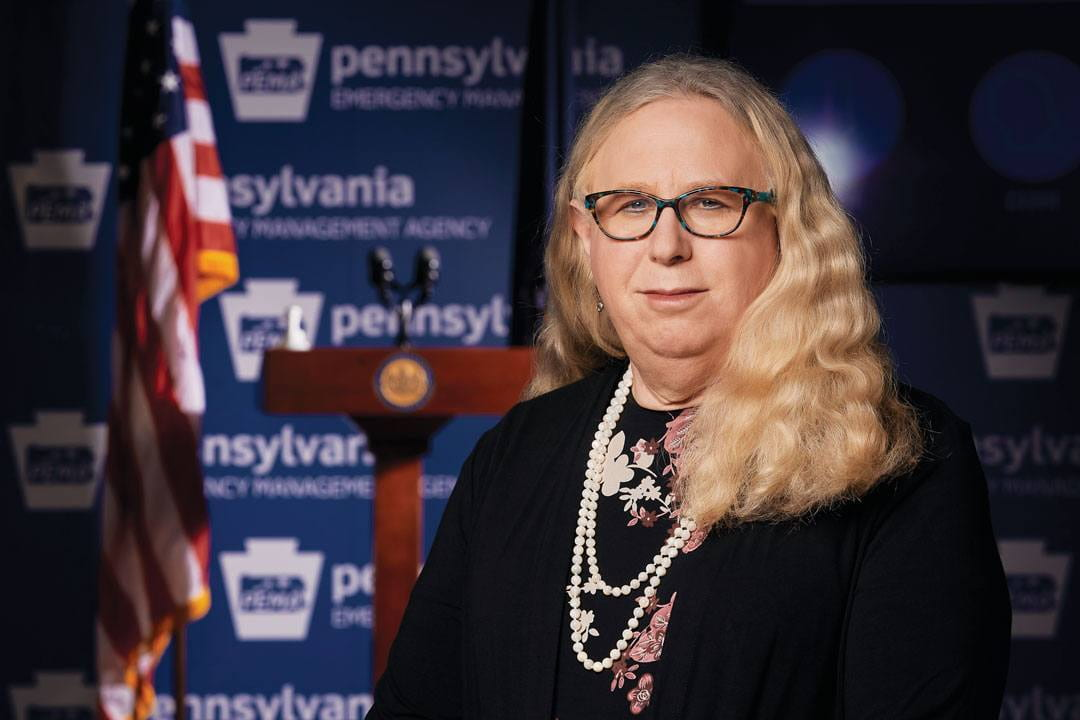
In June of 2021, our post titled PRIDE: Dr. Rachel Levine: Physician and LGBTQ+ Health Advocate profiled Dr. Rachel Levine, the first openly transgender woman to be confirmed for federal office by the United States Senate in 2021. Dr. Levine is still serving as the 17th Assistant Secretary for Health (ASH) at the Department of Health and Human Services. Dr. Levine served as the Pennslyvania Physician General from 2015 to 2018, during which time she was responsible for an initiative that allowed law enforcement agents to carry Naloxone, an anti-overdose drug, and also allowed Pennsylvanians to purchase Naloxone from a pharmacy without a prescription. Levine has used her platform to highlight health inequality issues impacting marginalized communities, including the LGBTQ+ community. In a 2020 interview with Philadelphia magazine, Dr. Levine said “One of my goals, being a state health official…is that people will see me. … it’s about letting people put a face to something they might not understand, so they aren’t fearful, so that they don’t get angry, so that it doesn’t lead to hate.” 

Picture of Dr. Rachel Levine standing in front of a podium and US flag.

Resources

We’ve also posted about LGBTQ+ resources and local organizations. A 2023 post titled Celebrate Pride: LGBTQ+ Healthcare Resources highlighted selected books, journals, and streaming videos that are part of Himmelfarb’s collection. A more recent post from earlier this month titled Pride in the Collection shared more books from our Diversity and Disparities in Health Care collection relevant to the LGBTQ+ community. 

References:

George Washington University School of Medicine & Health Sciences. (June, 12, 2017). Lawrence “Bopper” Deyton installed as Murdock Head Professor of Medicine and Health Policy. SMHS News. https://smhs.gwu.edu/news/lawrence-%E2%80%9Cbopper%E2%80%9D-deyton-installed-murdock-head-professor-medicine-and-health-policy

Puro, A. (2021, September 29). Dr. Carlos Rodriguez-Diaz: Aim for what you’re passionate about. Himmelfarb Library Blog. https://blogs.gwu.edu/himmelfarb/2021/09/29/dr-carlos-rodriguez-diaz-aim-for-what-youre-passionate-about/

Sullivan, P. (2011, September 7). Lawrence Deyton, award nominee, heads FDA campaign against smoking. The Washington Post, https://go.openathens.net/redirector/gwu.edu?url=https%3A%2F%2Fwww.washingtonpost.com%2Flocal%2Flawrence-deyton-award-nominee-heads-fda-campaign-against-smoking%2F2011%2F08%2F15%2FgIQABsMYAK_story.html

Close up image of a rainbow Pride flag.
Photo by Cecilie Johnsen on Unsplash

Last week’s Ways to Celebrate This Year’s Pride Month post highlighted a variety of books, documentaries, local events, and volunteer opportunities available to celebrate Pride Month this year. In today’s post, we’ll focus on LGBTQ+ healthcare-focused resources available through Himmelfarb Library that can deepen your understanding of the LGBTQ+ community. 

Selected Books

This selection of LBGTQ+ focused books is available 

Selected Journals

  • Journal of Health Disparities Research & Practice: This journal explores the problems and challenges created by health disparities among diverse populations including the LBGTQ+ community.
  • Health Affairs: This journal covers a wide range of topics related to health care policy and managed care and often addresses LGBTQ+ related issues.
  • International Journal of Transgender Health: This journal covers gender dysphoria, medical and psychological treatment of transgender individuals, social and legal acceptance of hormonal and surgical sex reassignment, and transgenderism.
  • Journal of Gay & Lesbian Mental Health: This multidisciplinary professional forum covers issues related to psychotherapy for gay, lesbian, and bisexual individuals.
  • Journal of LGBT Youth: This journal contains information on current developments in educational policy, curriculum development, professional practice, and pedagogy involving gay and lesbian studies.
  • Journal of LBGT Issues in Counseling: This journal provides a professional forum for research, best practices, and emerging trends and issues related to counseling the LGBT community.

Streaming Videos

  • Born to Be: This documentary provides an intimate look at the work of Dr. Jess Ting (he/him) and the impact of gender-affirming care on patients and has transformed his own life.
  • Cured: This documentary explores the campaign that led to the removal of homosexuality from the American Psychiatric Association’s list of mental illnesses in 1973.

Are you interested in learning more about influential members of the LGBTQ+ community? Check out Himmelfarb’s profile of Dr. Rachel Levine, the first openly trans woman to be confirmed to a federal position by Congress. Or learn more about one of GW’s own in our profile of Dr. Lawrence “Bopper” Deyton, Senior Associate Dean for Clinical Public Health at GW’s School of Medicine and Health Sciences (SMHS). Dr. Deyton played a crucial role in HIV/AIDS research during the early 1990s.

Are you interested in more general resources available at GW? GW’s LGBTQIA+ Resource Center provides comprehensive educational, support, and advocacy services including workshops, special events, and mentoring opportunities. GW Out for Health is a GW SMHS student-led organization that serves as an advocacy group and as a place to build relationships and a sense of community within the LGBTQ+ community within SMHS. Learn more about Out for Health by emailing gwofh@gwu.edu. You can also learn more by exploring the resources available on GW’s Gender and Sexuality Resources page.

In the United States, June is designated as LGBTQ+ Pride Month in recognition of the 1969 Stonewall uprising in Greenwich Village. For many activists and historians, the 1969 uprising represented a turning point in LGTBQ+ history and activism. While LGTBQ+ people have more legal and social rights in the aftermath of Stonewall, organizations, communities and activists within the United States and around the world continue to push for protections that ensure LGBTQ+ people can live freely. 

Recently, the Human Rights Campaign (HRC) released a ‘State of Emergency’ for LGBTQ+ people living in the United States. In their release the organization said “The sharp rise in anti-LGBTQ+ measures has spawned a dizzying patchwork of discriminatory state laws that have created increasingly hostile and dangerous environments for LGBTQ+ people…” (Human Rights Campaign, 2023)

Despite the rise in anti-LGBTQ+ legislation, people embrace June as a month reserved for celebration and community. As journalist Erin Reed wrote, “We carry forward a potent legacy, one of not merely surviving but flourishing even in the margins where we’ve been relegated. We return, time and time again, stronger than ever before…The essence of queer joy is resistance in its own right, and the reverberations of the Stonewall resistance continue to echo in our celebrations today.” (Reed, 2023) 

There are many ways to celebrate Pride month! Whether it is reading a book centering LGBTQ+ narratives, attending a local Pride event or watching a documentary, the following list serves as a starting point for celebrating and uplifting the LGBTQ+ community this month and all year long!

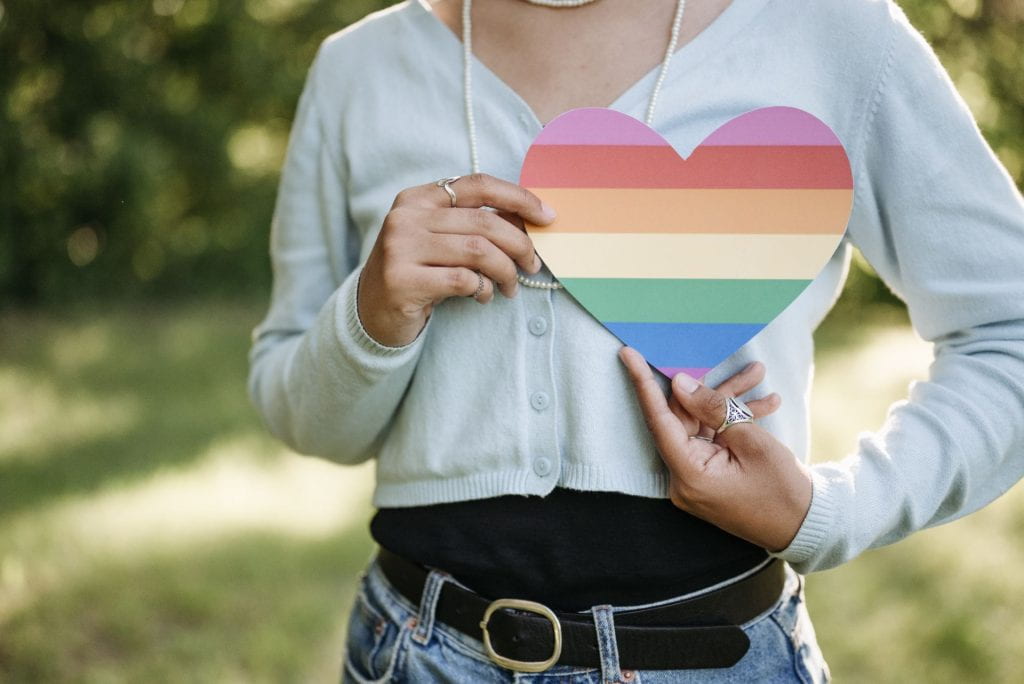
A person holding a cut out of a rainbow colored heart
Photo credit: Photo by Pavel Danilyuk

Books:

Reading books written by LGBTQ+ authors or that feature LGBTQ+ characters is an excellent way to celebrate Pride and feel connected to the community. They are a plethora of books that span genres. If you’re not sure where to begin, consider turning to sources such as the Lambda Literary Awards or the Stonewall Book Awards lists that have recognized LGBTQ fiction and non-fiction for years. Or start with some of the following titles: 

For additional community building, consider organizing a book club with your peers. You can select one title to read together and hold a discussion. Or each member of the book club can commit to reading a different book that was written by an LGTBQ+ author and make their pitch as to why the other members should read it as well! 

Documentaries:

Watching documentaries is another way to celebrate Pride this year! Similar to the book club suggestion, you can hold a documentary watch party and discussion to share any insights you have after viewing the film. Some titles that may be worth watching include Paris is Burning  an intimate look at New York City’s drag and ballroom culture in the 1980s; A Secret Love a film about Terry Donahue, Pat Henschel and their decades long love story; Disclosure that explores the depiction of transgender people in cinema; or United in Anger: A History of ACT UP which looks at the rise of the AIDS activist movement.

For additional recommendations on LGBTQ+ documentaries, please see Advocate’s 32 LGBTQ+ Documentaries to Watch for LGBTQ+ History Month, Collider’s Queer History is Pride: 11 of the Best LGBTQ Documentaries or Rotten Tomatoes’ 40 Essential LGBTQ+ Documentaries

Local Events:

Washington D.C. and the surrounding area is home to an active and vibrant LGBTQ+ community. Each June the city is nearly bursting with activities to meet new people, learn about the history of Pride or celebrate with your friends. The most popular event is the annual Capital Pride parade and festival which took place this past weekend. But there are still numerous opportunities to celebrate Pride in the area. 

On June 14, As You Are will hold its inaugural Queer Open Mic Night where writers, musicians, comedians and others can share their work! Want to shop for books and meet local readers? Then purchase a ticket for Little District Books’ June 22 Pride Party. The National Portrait Gallery will host an online conversation titled ‘Sexuality and the Harlem Renaissance’ on June 20. Near the end of June, The DC Mayor’s Office will present this year’s District of Pride Showcase at Lincoln Theatre!

Looking for other Pride events in the area? Check out the Pride guides from DC Trans Events, Clock Out DC or Queer Talk DC!

Volunteer:

If you want to give to the LGBTQ+ community, there are local and national organizations in need of volunteers. The DC Center for the LGBT Community sponsors local volunteer opportunities throughout the year. Or become a volunteer for organizations like The Trevor Project, the Human Rights Campaign or PFLAG!

If you are interested in organizing an event at George Washington University, Himmelfarb Library’s Diversity, Equity and Inclusion Committee is open to partnering with student, resident or faculty groups! Please contact the committee’s current chair, Rachel Brill at rgbrill@gwu.edu for more information! 

Whether you are a member of the LGBTQ+ community or an active ally, Pride month is a time to connect with our loved ones and celebrate strides gained through activism. It is also a month where we recognize the many contributions the community has made to our contemporary culture. No matter how you decide to celebrate Pride, what is most important is that we collectively work to build a world where people, regardless of their sexual orientation, gender or gender expression can live as their most authentic selves!

References: