Skip to content

1

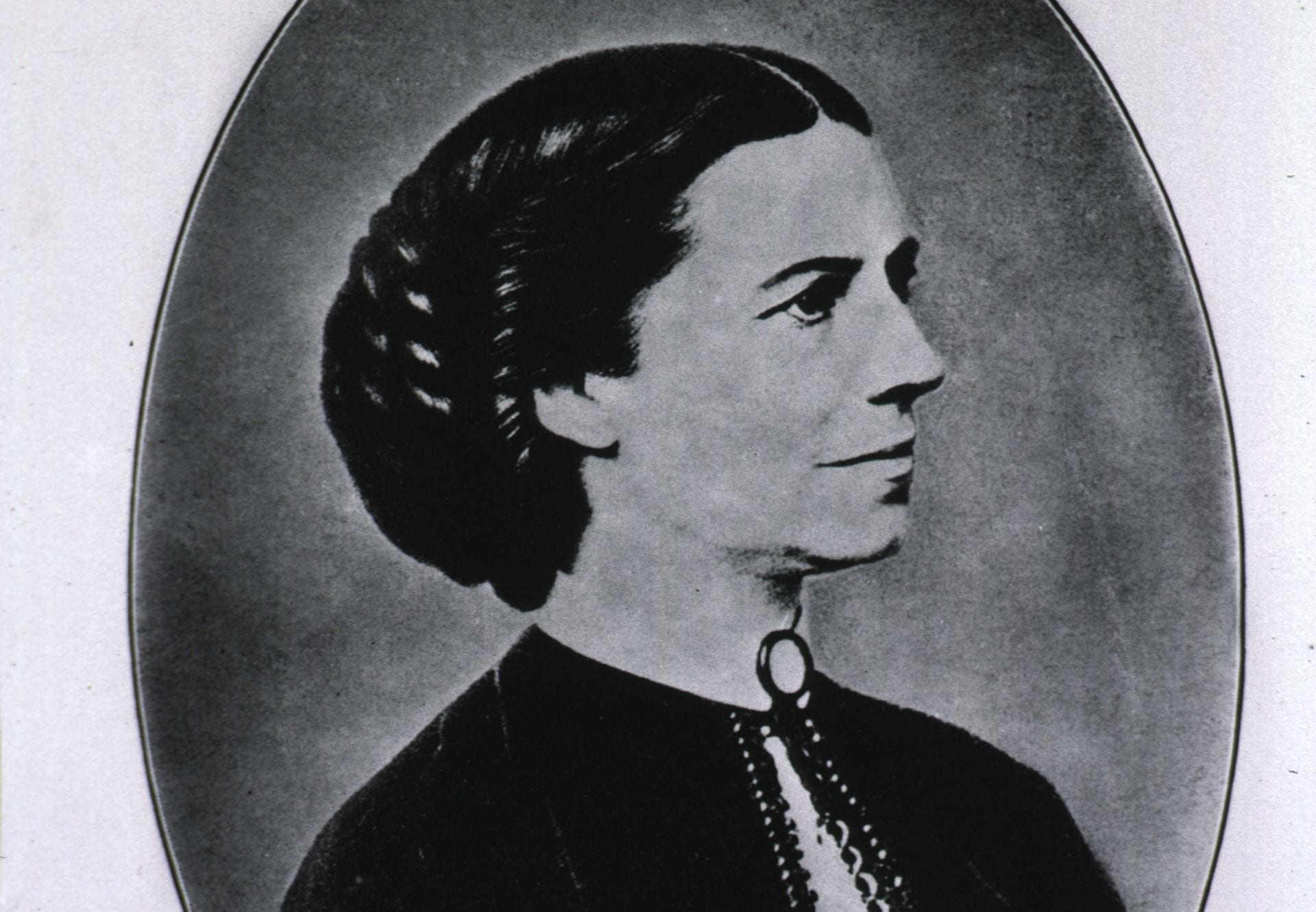
Black and white profile portrait of Clara Barton.
[Clara Barton portrait 1]. U.S. National Library of Medicine Digital Collections. http://resource.nlm.nih.gov/101409980

In an effort to remain accountable to communities who have been negatively impacted by past and present medical injustices, the staff at Himmelfarb Library is committed to the work of maintaining an anti-discriminatory practice. We will uplift and highlight diverse stories throughout the year, and not shy away from difficult conversations necessary for health sciences education. To help fulfill this mission, today's blog post will cover Clara Barton.

Clara (Clarissa) Harlowe Barton, is perhaps best known as the founder of the American Red Cross. But Barton’s impact stretches far beyond her work with the Red Cross. “Her intense devotion to serving others resulted in enough achievements to fill several ordinary lifetimes” (American Red Cross, n.d.).

Born in 1821 in North Oxford, Massachusetts, she was the youngest of five children. When she was 11 years old, an older brother was seriously injured in a fall. Barton spent two years nursing him back to health until he was fully recovered. While Barton would never have any formal training as a nurse, this experience proved to be indispensable. She later wrote about the experience stating:

“I learned to take all directions for his medicine from his physician…and to administer them like a genuine nurse. My little hands became schooled to the handling of the great, loathsome, crawling leeches which were at first so many snakes to me, and no fingers could so painlessly dress the angry blisters; and thus it came about, that I was the accepted and acknowledged nurse of a man almost too ill to recover.”

(Clara Barton Missing Soldiers Office Museum, 2021)

Despite this early nursing experience, Barton would not embrace a nursing career until later in life. At the age of seventeen, Barton worked as a teacher in North Oxford, Massachusetts (Clara Barton Birthplace Museum, 2017). Twelve years later, she opened the first free public school in Bordertown, New Jersey (Clara Barton Birthplace Museum, 2017). The school grew from only six students on the first day of classes to more than 200 students by the end of the school year (Clara Barton Birthplace Museum, 2017). When the school opened in the fall of 1853, Barton was shocked to learn that a man had been hired as the school’s principal, earning twice her salary to run the school that she had founded and made successful. Outraged at this news, she resigned her teaching position. “I may sometimes be willing to teach for nothing, but if paid at all, I shall never do a man’s work for less than a man’s pay” she proclaimed.

The following year, Barton moved to Washington, D.C. to be “one of only a few female clerks at the US Patent Office and the only woman in her office receiving a salary equal to the male clerks” (National Park Service, 2020). As one of the first women employees of the federal government, she faced harassment from her male colleagues who “tried to besmirch her good name and get her fired” (National Park Service, 2020). 
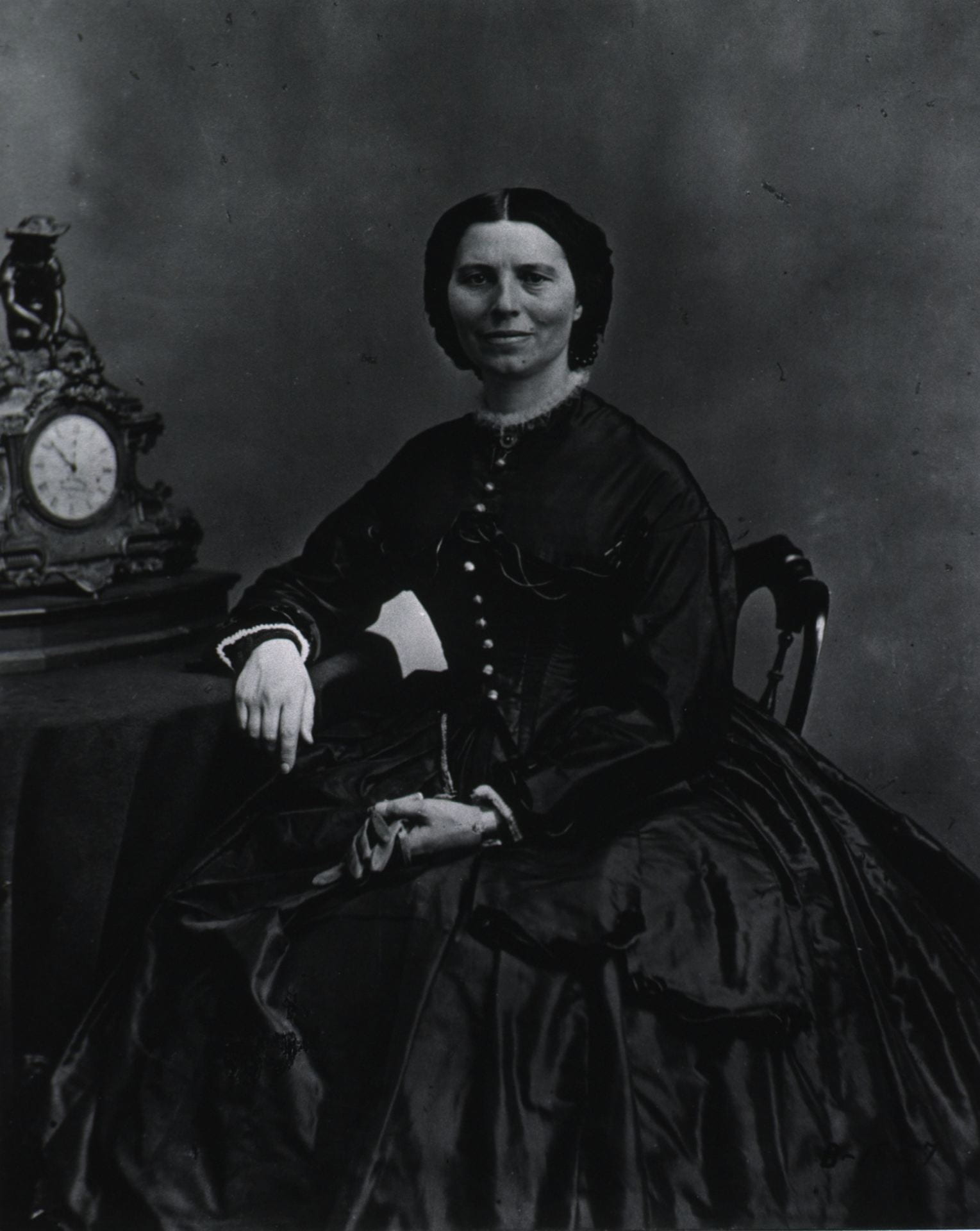
Black and white picture of Clara Barton.
[Clara Barton portrait 2]. U.S. National Library of Medicine Digital Collections. http://resource.nlm.nih.gov/101409986

In 1861, Barton moved into a boarding house on 7th St., now the site of the Clara Barton Missing Soldiers Office Museum. The Civil War had just begun, and Barton saw a need for providing supplies and personal assistance to men in uniform. She began collecting supplies and obtained passes from the government to deliver her supplies and services to the front lines and field hospitals. After appearing “at a field hospital at midnight with a wagon-load of supplies,” she became known as the “Angel of the Battlefield” (American Red Cross, n.d.). She nursed, comforted, and cooked for the wounded often at great personal risk to her own safety. On one account, “as she knelt down to give one man a drink, she felt her sleeve quiver. She looked down, noticed a bullet hole in her sleeve, and then discovered that the bullet had killed the man she had been helping” (National Park Service, 2020).

As the war drew to a close, Barton often found herself responding to letters from family members looking for missing soldiers. Again seeing a need, Barton established the Office of Correspondence with Friends of the Missing Men of the United States Army. Barton and her assistants received and answered more than 63,000 letters and identified more than 22,000 missing men. Some of these men were still alive. Years later, the “Red Cross established a tracing service, one of the organization’s most valued activities today” (American Red Cross, n.d.). 

In 1869, Barton took a trip to Switzerland where she learned about the International Red Cross. Barton appealed to three sitting US Presidents to sign the Geneva Treaty (American Red Cross, n.d.). In 1882, President Chester Authur signed the treaty, and it was ratified by the Senate (American Red Cross, n.d.). Under Barton’s leadership, the American Red Cross helped victims of forest fires in Michigan, survivors of the Johnstown flood, famine in Russia, hurricane and tidal wave relief in a predominantly African-American community in the Sea Islands of South Carolina just to name a few (American Red Cross, n.d.). “The American Red Cross, with Barton at its head, was largely devoted to disaster relief for the first 20 years of its existence” (American Red Cross, n.d.). 

Picture of Clara Barton's home in Glen Echo, Maryland.
Retrieved from the Library of Congress, https://www.loc.gov/item/2011631520/

A Red Cross supply warehouse in Glen Echo, Maryland served as the first permanent headquarters of the Red Cross, as well as Barton’s home. She lived here for the last 15 years of her life until her death on April 12, 1912. This site is now the Clara Barton National Historic Site. While this site is currently closed due to the pandemic, it is well worth touring if you have the opportunity in the future. 

In 1904, at the age of 82, Barton stepped down from the Red Cross. Today’s American Red Cross still focuses on providing disaster relief, and the mission has been expanded to include: providing lifesaving blood through their blood donation program; providing training and certification courses in lifesaving skills such as first aid, CPR, and AED use; providing international disaster relief services; and helping military families prepare for and cope with the challenges of military service.

During her lifetime, Barton was also a strong supporter of women’s rights. She supported suffragists such as Susan B. Anthony, Elizabeth Cady Stanton, and Frances D. Gage, and often spoke publicly in favor of equal rights for women (Clara Barton Missing Soldiers Office Museum, 2021). Barton dedicated her life to the service of others as a teacher, a Civil War nurse, and founder of the American Red Cross. By dedicating her life to the care of others, she left a legacy of caregiving and disaster relief in America and abroad.

References:

American Red Cross. (n.d.) Founder Clara Barton. Red Cross. https://www.redcross.org/content/dam/redcross/enterprise-assets/about-us/history/history-clara-barton-v5.pdf

Clara Barton Missing Soldiers Office Museum. (2021). Biography. https://www.clarabartonmuseum.org/bio/

[Clara Barton portrait 1]. U.S. National Library of Medicine Digital Collections. http://resource.nlm.nih.gov/101409980

[Clara Barton portrait 2]. U.S. National Library of Medicine Digital Collections. http://resource.nlm.nih.gov/101409986

Highsmith, C.M., photographer. Clara Barton’s Home, Glen Echo, Maryland. United States Maryland Glen Echo, None. [Between 1980 and 2006] [Photograph] Retrieved from the Library of Congress, https://www.loc.gov/item/2011631520/

National Park Service. (June 15, 2020). Clara Barton. https://www.nps.gov/people/clara-barton.htm

MATLAB logo on blue background.

MATLAB is now available in Himmelfarb Library’s Bloedorn Technology Center and Middle Lab, and can also be installed on your personal computer! Does your research involve analyzing large-scale datasets with multiple variants and dimensions? Do you teach data analysis? If you answered yes to either of these questions, MATLAB could be for you.

MATLAB is a programming platform designed for engineers and scientists. MATLAB language is a matrix-based language that allows for natural expression of computational mathematics. MATLAB is typically used for math and computation, developing algorithms, modeling, simulation, prototyping, data analysis, exploration, visualization, and scientific graphics.

MATLAB is available on the following workstations (map) on Himmelfarb’s third floor:

  • Bloedorn carrels: 305B-305G, 305-L-305Q
  • Bloedorn workstations: L1, L2, N7
  • Middle Lap workstations: J1, J2

Personal use of MATLAB is available to all GW affiliates through desktop, online and mobile access.

Are you new to MATLAB and want to learn more? Check out the MATLAB tab on our Tutorials Guide for links to MATLAB tutorials and courses. An ebook about MATLAB for Behavioral Researchers is also available. For a full listing of statistical software available at Himmelfarb’s Bloedorn Technology Center, take a look at the Statistical Software at Bloedorn guide.

Black and white hands clasping in unity.
Photo by Aarón Blanco Tejedor on Unsplash

In an effort to remain accountable to communities who have been negatively impacted by past and present medical injustices, the staff at Himmelfarb Library is committed to the work of maintaining an anti-discriminatory practice. We will uplift and highlight diverse stories throughout the year, and not shy away from difficult conversations necessary for health sciences education. To help fulfill this mission, this week’s blog post will cover the School of Medicine and Health Sciences (SMHS) Anti-Racism Coalition (ARC).

The GW Anti-Racism Coalition is working to promote thoughtful conversations and active anti-racism efforts by the medical community. ARC recognizes the “ethnic and cultural diversity of the varied learners in our medical enterprise and their subsequent interaction with and care for an internationally heterogeneous patient population” and is committed to “the development and active implementation of an antiracist academic community to identify and eradicate all forms of racism and ethnic oppression.” While dismantling racism within the medical education community, the subsequent patient interactions and even within our interactions with each other is an enormous undertaking, ARC is committed to doing the difficult and necessary work towards reaching this end goal.

One way the group is developing an antiracist academic community is through the ARC Educational Series, a series of lectures and workshops centered around topics of race, racism, and anti-racism. The next session in this series, entitled Moving Beyond Bystanding...to Disrupting Racism, will take place on Wednesday, February 17, 2021 at 12:00pm-1:30pm. In this bystander training session, Dr. Lanre O. Falusi (MD, FAA), and Dr. Maranda C. Ward (EdD, MPH) will discuss how positions of power and privilege operate in ways that are often taken for granted. Characteristics and challenges of being a bystander and disruptor of racism will be discussed.

On Thursday, February 25, 2021 at 7:00pm, ARC will host a discussion of the film Black Men in White Coats. This documentary examines the systemic barriers that prevent black men from becoming medical doctors and the societal consequences of this fact. The movie will be available for pre-screening from February 22nd through February 25th. 

Recordings of past sessions are available on the ARC Educational Series website. Past sessions include:

  • Understanding the Connection between Race and Social Determinants of Health
  • Medicine, Public Health, and Anti-Racism Activism: The Life and Career of Dr. Virginia M. Alexander
  • Race in America Lecture Series: “1619: Reflecting on the Legacy of Slavery in America” - A Conversation with Nikole Hannah-Jones
  • How to Talk about Race, Power, and Privilege in Classroom and Clinical Settings
  • Structural Racism and Health Professions Education
  • “It’s Not You, It’s Me”: Preventing Bias in Personal, Professional, and Patient-Related Interactions
  • LGBTQ Health and Policy in the Biden-Administration
  • Developing a Dangerous Unselfishness

Links to additional anti-racism resources are also available. Whether you are you a long time-advocate for racial equality and equity, or are new to the plight for racial justice, ARC has resources and educational sessions available that can help facilitate your personal anti-racist growth. 

Caution tape.
Photo by Jessica Tan on Unsplash

Have you heard about predatory publishing, but aren’t sure what it is or how to spot a predatory journal? Himmelfarb Library has a predatory publishing guide that can answer your questions! 

Predatory journals are characterized by “false or misleading information, deviation from best editorial and publication practices, a lack of transparency, and/or the use of aggressive and indiscriminate solicitation practices” (Grudniewicz et al., 2019). Predatory journals have used the open access publishing model to make profits without providing the same peer-review, archiving, and editorial services that legitimate scholarly open access journals provide. 

COVID-19 has necessitated dramatic shifts in the scholarly publishing industry including fast-tracking research through the peer-review process making research available at record speeds. Preprints, research manuscripts disseminated prior to undergoing peer review, have become a normal part of the scholarly publishing landscape. These changes have made it more difficult to distinguish between legitimate scholarly journals and predatory journals. A recent post about predatory journals during the COVID-19 pandemic highlights the added dangers predatory journals have posed to the academic community.

Himmelfarb’s predatory publishing guide can help you avoid falling into the predatory publishing trap. Learn how predatory journals operate and review the comprehensive list of red flags that will help you identify these journals. Have you received unsolicited emails from journals you’ve never heard of asking you to submit a manuscript for an upcoming issue? View sample emails from predatory publishers that illustrate tactics used by these publishers. 

Learn how to evaluate these journals with the available journal, email, website and conference assessment tools that are available. Practice your evaluation skills with case studies provided. Are you more of a visual learner? Numerous videos on the topic are also available. Many predatory publishers have expanded their business models to include predatory conferences, which are also covered in this guide. 

Whether you are familiar with predatory publishing, or are new to the topic, Himmelfarb’s predatory publishing guide will help you gain a deeper understanding of this important topic and learn how to avoid falling victim to this threat. If you have questions about predatory publishing, contact Ruth Bueter (rbueter@gwu.edu). 

References:

Grudniewicz, A., Moher, D., Cobey, K. D., Bryson, G. L., Cukier, S., Allen, K., ... & Ciro, J. B. (2019). Predatory journals: no definition, no defence. Science (576)7786. 210-212.

Woman doing yoga stretch at home.
Photo by Akemy Mory on Unsplash

Staying or getting fit might seem a bit overwhelming in the midst of a global pandemic when many gyms are closed. Even though some gyms are open with a limited capacity, many don’t feel safe going to a gym right now. Working and studying from home means that we are spending significantly more time at home than we did a year ago. Many of us are also spending more time sitting in front of screens: working on the computer, checking our phones and social media, video conferencing with friends and family, or binge watching the latest season of our favorite show. All of this sitting can take a toll on your fitness level. 

Focusing on fitness during these times can have numerous benefits. Exercise not only has fantastic benefits for your physical health, but it can also be beneficial to your mental health. Exercise can relieve stress, reduce anxiety, and even improve your sleep. Here are some tips that can help you stay fit from the comfort of your home:

Be realistic: If you weren’t exercising regularly before the pandemic started (or even before Thanksgiving), it might not be reasonable to expect to exercise 5-7 days a week at first. Start small and aim for 3-4 days of exercise per week. Congratulate yourself when you meet this goal on a consistent basis, and then add on from there.

Be Safe: If a new move or routine doesn’t feel right, or leaves you feeling worse, consider waiting until you can work with a trainer, virtually or in a studio. Working with a professional can help you achieve the right alignment, proper technique, clean form and can help prevent an injury that could leave you unable to exercise. 

Be Accountable: Being accountable to others or to a program is a great way to stay motivated. Whether you work out with a partner, participate in weekly fitness challenges, or just share workout selfies, it’s nice to have someone who can share the experience and provide support and inspiration. Not sure where to start? Ask a friend or two who have similar fitness interests to be your accountability partners. Find a social media group to join. Find a program like FitnessBlender, or a YouTube channel with week or month-long playlists to follow.

Be a Good Neighbor: If you live above someone else, or share a wall with a neighbor, look for low-impact routines. Take that HIIT routine outside. Resist the urge to drop the weights. Like to exercise to loud music? Wear headphones or earbuds. Your neighbors are spending more time at home as well - your exercise routine shouldn’t be an annoyance to your neighbors. 

Woman doing yoga video on laptop.

Find Workouts Online: The internet is an amazing resource for finding free workout routines and videos. Whether you prefer yoga, Pilates, HIIT, Tabata, Zumba, strength training, or circuit training, you can find routines and videos to suit your preferences online. YouTube is a fantastic resource for workout videos. If you prefer less structure, you can find sample routines and mix and match exercises to suit your needs. There are also numerous fitness apps you can download on your phone or tablet.

Photo by Kari Shea on Unsplash

Get Some Fresh Air: Take your workout outside by going for a walk, run, or bike ride. Even a short walk on your lunch break can get your blood moving and be a much needed break from staring at a screen all day. Remember to follow mask guidance, and follow social distancing guidelines while you are out to reduce your risk of COVID-19 exposure. Don’t let winter stop you from getting outside - bundle up and get outside! 

No Equipment? No Problem! If you don’t have equipment or weights at home, don’t worry! You can still get in some great exercises just by using your own body weight. Body weight exercises are a great way to get toned and lean. Take a look around your house for items you can use instead of weights. Water bottles or soup cans can be a good substitute for light weights. Use gallon water jugs in place of kettlebells. Use a chair or step stool for tricep dips or elevated side planks. You might also want to consider ordering inexpensive fitness equipment such as resistance bands, suspension trainers, jump ropes, yoga mats, or pull-up bars. 

Don’t let being at home during the pandemic keep you from focusing on your fitness. You don’t have to spend a lot of time or money at a gym to be fit. There’s a lot you can do from your own living room! 

Special thanks to Stacy Brody for her valuable input on this post.

Photo by Finn on Unsplash

We’ve all had a lot of handle this year, and we’ve had to learn how to manage our lives differently because of the pandemic. We’re all spending more time at home, and less time in a traditional office or classroom setting. Our lives at home may look very different than they did nine months ago. With everything going on in the world right now, it’s no wonder that many of us are feeling more stressed, anxious, depressed, socially isolated, having trouble sleeping, or all of the above. 

Due to COVID-19 restrictions, the ways in which we would normally cope with these issues may not be available in the same way they were before the pandemic. It’s okay if you find yourself struggling with mental health right now - you are not alone.

Taking care of your mental health is just as important as taking care of your physical health. GW provides resources to help you take care of your mental health. So take some time for yourself and explore these options:

Resources for Students:

Resources for GW Employees:

So whether you are a GW student, faculty or staff member, GW provides numerous resources that can help you focus on your mental health and help you manage life during the pandemic. Take some time to focus on yourself and your mental health. You are worth it! 

The pandemic has necessitated significant shifts within the scholarly publishing environment. COVID-19 research has reached readers at record speeds, and for many major publishers, been made available at no cost to readers. Preprints are now mainstream and are indexed in PubMed, as well as on preprint servers such as medRxiv and bioRxiv. But are these changes here to stay? And what other changes has COVID-19 brought about within the scholarly publishing world? 

Perhaps the most obvious change in publishing during the past 6 months is the “extraordinary proliferation of research and commentary on the pandemic” (Bell & Green, 2020, p. 379). The scholarly publishing community has placed an increased value on open science. A majority of large publishers have made their COVID-19 content freely accessible. In a recent post on The Scholarly Kitchen, “both the positive (rapid reporting and sharing of information) and the negatives (the glut of bad science being issued as preprints and promoted via mainstream media without proper curation) are now evident, with the good generally outweighing the bad” (Crotty, 2020). 

The need for increased speed of publication has many critics afraid that pushing papers through the peer review process quickly will result in increased retractions. In fact, as of October 15, 2020, RetractionWatch lists 36 retracted COVID-19 papers, including articles from prestigious journals such as  The Lancet, New England Journal of Medicine. Alongside this “crisis in peer review” is a “less widely publicised crisis in peer reviewers, with willing and able peer reviewers increasingly difficult to find” (Bell & Green, 2020, p. 380). While the number of submissions is ever increasing, “academics are baulking at being asked to review them” (Bell & Green, 2020, 380). Additionally, article submissions from women authors have decreased presumably due to the fact that “the effects of lockdown have disproportionately disadvantaged women across the disciplines” (Smart, 2020, p. 196). This has also likely contributed to the shortage of peer reviewers. 

And let’s not forget the financial impact of COVID-19. Researchers are competing for limited grant funding. Many large publishers are freezing subscription prices. Library collection budgets are being cut, forcing libraries to cancel subscriptions to valued resources, which will further impact publishers' and researchers. Research societies that rely on annual meetings for large portions of their income don’t expect to hold large meetings until late in 2021 at the earliest, and expect to see a decline in membership as discretionary income of individual members becomes scarce (Crotty, 2020).  

It’s not all doom and gloom though. On the bright side, “recognition of the need to fund scientific research has never been stronger (Crotty, 2020). Governments and funding agencies now see the value of open science, which “creates the potential for continuing progress through the creation of incentives and eventually, after normality resumes, the dedication of increased funding to both support existing OA models and to drive the creation of new models” (Crotty , 2020). While the landscape of scholarly publishing is constantly evolving, COVID-19 has undoubtedly already had a dramatic influence on this evolution. 

References:

Bell, K., & Green, J. (2020). Premature evaluation? Some cautionary thoughts on global pandemics and scholarly publishing. Critical Public Health, 30:4, 379-383, DOI: 10.1080/09581596.2020.1769406

Crotty, D. (2020, August 4). Two steps forward, one step back: The pandemic’s impact on Open Access progress. The Scholarly Kitchen. https://scholarlykitchen.sspnet.org/2020/08/04/two-steps-forward-one-step-back-the-pandemics-impact-on-open-access-progress/

RetractionWatch, (2020). Retracted coronavirus (COVID-19) papers. RetractionWatch [Weblog, accessed October 15, 2020], https://retractionwatch.com/retracted-coronavirus-covid-19-papers/

Smart P. (2020). Publishing during pandemic: Innovation, collaboration, and change. Learned publishing: journal of the Association of Learned and Professional Society Publishers, 33(3), 194–197. https://doi.org/10.1002/leap.1314

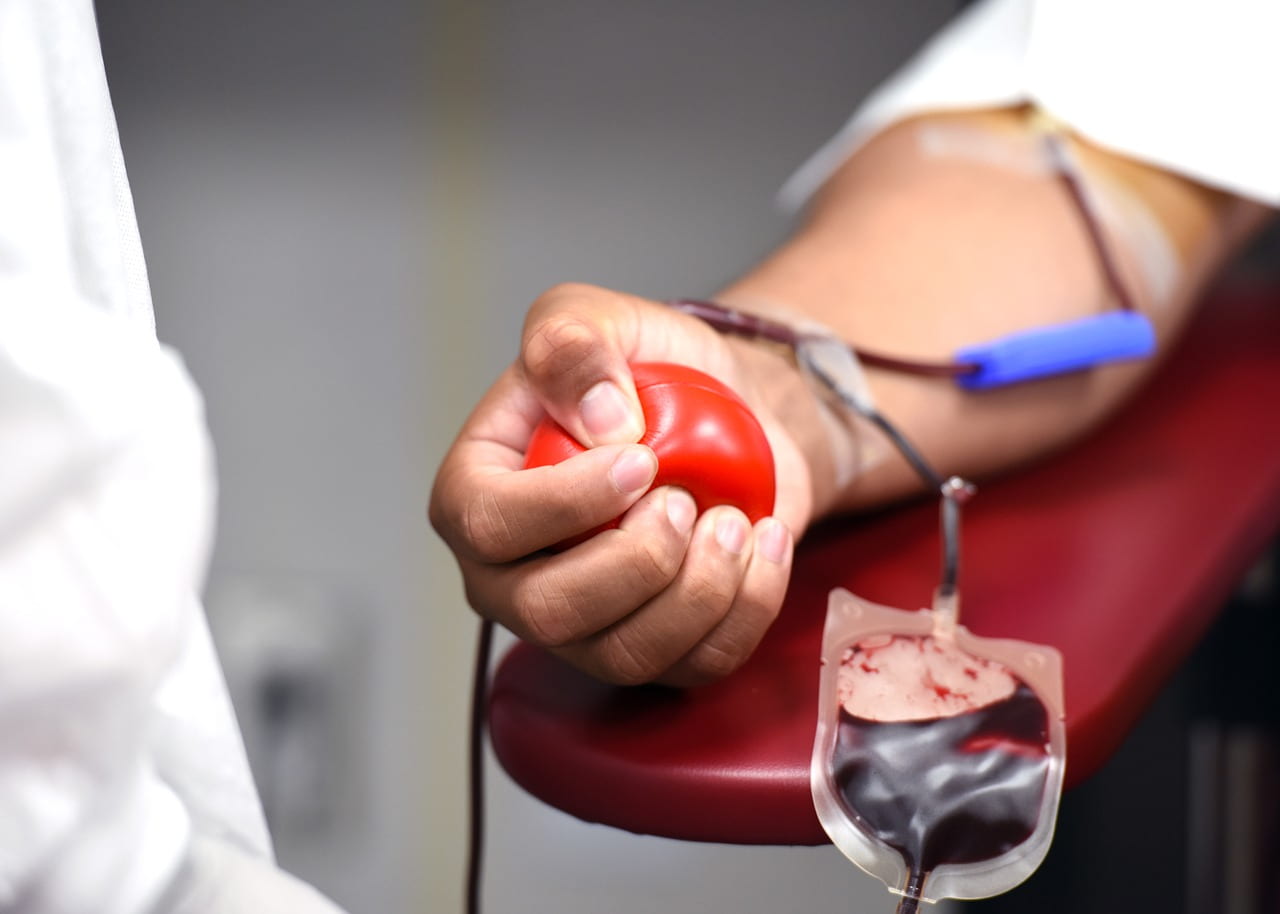
Hand squeezing stress ball while donating blood.
Image by Michelle Gordon from Pixabay

Have you wondered how you could help others during the COVID-19 pandemic? Donating blood is an easy and free way that you can make a positive contribution during these times. 

Donating blood with the American Red Cross is easy, and can even help you embrace the spirit of fall and Halloween! Donate during the month of October to earn the Vampire Badge in the Blood Donor App. If earning the Vampire Badge isn’t enough motivation for you, you can also enter to win a $1,000 Amazon gift card during the month of October. You can use the Blood Donor App to schedule an appointment to donate, complete your pre-donation questionnaire (RapidPass), and track your blood’s journey from donation all the way to completion. You can also join the GW team within the Blood Donor App and have your donation counted towards GW’s total lives impacted.

Ever wonder if you’ve been exposed to COVID-19 but were asymptomatic? The Red Cross is currently testing all donations for COVID-19 antibodies. Donating is a great way to find out if you have COVID-19 antibodies. To be clear - you will not be tested for COVID-19. Antibody tests assess whether or not you’ve had an immune response to COVID-19; it does not determine if the virus is currently present. People with antibody-positive donations can help coronavirus patients by donating convalescent plasma. Eligible convalescent plasma donors must be fully recovered from COVID-19.

Whole blood donations are used for blood transfusions, but can be used to help multiple people by separating red cells, plasma and platelets. The requirements for donating whole blood are simple: Donors must be healthy and feeling well, be at least 17 years old, and weigh 110 pounds or more. If you’ve donated blood recently, you should wait 56 days between donations. Donor centers are taking proper safety precautions during the pandemic. All donors and staff are required to wear masks, beds are socially distanced, and enhanced cleaning processes are being followed.

Donating blood is a great way to contribute in a small way during the pandemic. If the Vampire Badge and the chance to win a $1,000 Amazon gift card aren’t enough to convince you to donate, perhaps the post-donation cookies will entice you! Happy donating!

Amid the COVID-19 pandemic, research papers have been fast-tracked to publication. The pandemic has necessitated significant shifts in the scholarly publishing model that have resulted in research being made available at record speeds and, for most major publishers, available at no cost. Preprints have become mainstream. While many see these as positive changes, there is a darker side to this shift in scholarly publishing.

Predatory journals, known for their lack of peer review and willingness to publish any article written by someone able to pay the required Article Processing Charges (APCs), have been largely forgotten during the COVID-19 pandemic. Predatory journals are known for their promises of “rapid” publication. But in the time of COVID-19, quick publication has become the norm even among legitimate and highly respected journals. This has led to questions about the quality of peer review and has led to frequent retractions of COVID-19 related articles. 

In a recent article published in The Journal of Academic Librarianship, Teixeria da Silva (2020) states that “the risks to the scholarly community, academic publishing and ultimately public health are at stake when exploitative and predatory publishing are left unchallenged.” Academics and the media alike are reading, discussing and trusting content that has not undergone a rigorous peer review process. “If one considers that this explosion in literature is directly affecting human lives and public health, astute academics need to be able to sift through pro-preprint propaganda, as well as poorly conducted peer review and editorial processing in peer reviewed journals, in order to be able to distinguish valid from invalid research” (Teixeria da Silva, 2020). 

A recent study of predatory publishing in the COVID-19 era analyzed the prevalence of COVID-19-related articles published in known predatory journals. Between January and May 2020, the study found 350 articles were published in 109 predatory journals, and five of these journals were indexed in PubMed/MEDLINE (Vervoort & Shrime, 2020). The study estimated that the amount of money spent to cover APCs for these articles totaled $33,807.41 (Vervoort & Shrime, 2020). 

Vervoort and Shrime (2020) highlighted three major concerns about predatory journals in light of the pandemic:

  1. "Loss of potential valuable biomedical and epidemiological information."
  2. "Spread of misinformation with potentially harmful or negligent consequences."
  3. "Money earned off of unknowing authors in times where many scientists and clinicians have taken pay cuts."

Retraction Watch highlighted a sting article entitled “SARS-CoV-2 was Unexpectedly Deadlier than Push-scooters: Could Hydroxychloroquine be the Unique Solution?” by authors claiming to be from “The Institute for Quick and Dirty Science” in Switzerland. The goal of this sting article was “to highlight a concerning paper in the Asian Journal of Medicine and Health, which they and others suspect of being a predatory publication” (Marcus, 2020). The “concerning paper” included among its authors several hydroxychloroquine partisans, and contains “errors of analysis, raises regulatory questions and sometimes misunderstand the appropriate terms” (Marcus, 2020). 

The authors of the paper in question had claimed that their article was “proof of the efficacy of HCQ,” and that the journal in which it was published was “as serious as the Lancet” (Marcus, 2020). In an effort to prove that this same journal would indeed publish anything as long as the APC has been paid, the sting article authors set out to write and publish a bogus article in this journal. The article was indeed published! Although it has since been retracted due to “serious scientific fraud,” it would not have been published at all had any real peer review taken place prior to publication.

While there is a real need for legitimate research to be published quickly in order to increase our knowledge about COVID-19, authors and readers alike should remember that predatory journals have not taken time off during the pandemic. “The academic community has the duty to respond to these deeply perverse practices, and thereby protect fellow researchers and combat misinformation” (Vervoort & Shrime, 2020). 


References:

Marcus, A. (2020). Hydroxychloroquine, push-scooters, and COVID-19: A journal gets stung and swiftly reacts. Retraction Watch, https://retractionwatch.com/2020/08/16/hydroxychloroquine-push-scooters-and-covid-19-a-journal-gets-stung-and-swiftly-retracts/

Teixeira da Silva. (2020). An alert to COVID-19 literature in predatory publishing venues. The Journal of Academic Librarianship. (46)5.

Vervoort, D., Ma, X., & Shrime, M. (2020). Money down the drain: predatory publishing in the COVID-19 era. Canadian Journal of Public Health. https://doi.org/10.17269/s41997-020-00411-5

Hand holding pen ready to sign a contract.
Photo by Cytonn Photography on Unsplash

Are you in the process of publishing a scholarly article? Do you plan on using your article in a class you are teaching? Want to share your article with colleagues? Maybe you’d like to modify the work in the future or archive your work in Himmelfarb’s institutional repository, the Health Sciences Research Commons. Doing any of these things may be in direct violation of the agreement you sign with the publisher prior to your work being published. 

An important consideration to keep in mind when choosing a journal is author rights. Many traditional publishers include language in author agreements that transfers most, if not all, of an author's right to their work to the publisher. Most publishers don’t even try to hide the fact that authors are signing away the rights to their works - publishers often call these agreements “Copyright Transfer Agreements.” These agreements limit the authors ability to archive, share, use, modify or display their work once it has been published. Before you sign an agreement with a publisher, consider including an addendum to ensure that you retain certain rights to reuse and share your work. 

One option is to submit a SPARC Author Addendum that modifies the publisher’s agreement and allows you to maintain the right to create derivative works, authorize others to share and reuse your work (for non-commercial purposes), and to distribute your work in class or to colleagues for educational purposes. You could also use the available GW custom author addendum. For more information about negotiating author rights, take a look at the Author Rights page of our Scholarly Publishing Guide or contact Himmelfarb’s Metadata and Scholarly Publishing Librarian, Sara Hoover (shoover@gwu.edu).