VOYAGER SCHOLAR WINNERS

Eve Danishevsky headshot

Voyaging Toward Global Connection
Three George Washington University juniors have been named recipients of the prestigious 2025–2027 Obama-Chesky Voyager Scholarship for Public Service. Eve Danishevsky, Malyna Gomez Trujillo, and Amanda Valenzuela were selected for their commitment to public service, community engagement, and demonstrated leadership potential.

We recently caught up with Eve, who, in addition to her studies as an Elliott undergraduate student pursuing a B.S. in International Affairs and Finance, is a Dean’s Scholar and a program coordinator of Elliott School’s Central Asia Program. We spoke with her about plans to translate her experiences into values-based leadership that inspires equitable and lasting change.

Q1: The Voyager Scholarship is all about building bridges and gaining empathy through new experiences. How do you think traveling and meeting new communities will change the way you approach public service?

One of the most unique parts of this scholarship is the $10,000 allotment for a summer travel opportunity, which I plan to use for on-the-ground research across all of Central Asia. International development is a broad category of public service that I chose as my focus area in my application, and I hope to hone in more narrowly on the powerful ways that intercultural immersion can serve as a form of soft diplomacy. There are so many misconceptions about Americans and Central Asians from each respective region, and the opportunity to meet with a wide variety of different groups will give me the opportunity to gain nuanced insights into how different people understand identity and global citizenship. These are perspectives that I would never be able to fully grasp from a classroom or through research alone.

Q2: President Obama and Brian Chesky, who founded the scholarship along with Michelle Obama, talk a lot about curiosity—how it can open doors and create understanding. How has curiosity shaped your journey so far, and how do you hope to build on that through this program?

Curiosity is the reason that I chose GW, for the opportunity to continue expanding my worldview on parts of the world that aren’t particularly emphasized in typical international relations programs. That curiosity has made me realize that the change that I want to enact transcends the typical boundaries of what people think it means to work in public service—I want my work to connect people of different cultures in ways that are long-lasting and intergenerational. The funding and mentorship opportunities that this program provides will let me expand on that in ways that I can’t even imagine right now, whether that’s through collaborating with local leaders to create initiatives that foster mutual understanding or working more broadly with the Bureau of Educational and Cultural Affairs to research more about the efficacy of free exchange programs in Eurasia.

Q3: The scholarship focuses on values-based leadership. What values are most important to you in your public service work, and how do you hope to grow as a leader over the next two years?

Community, impact, and commitment drive my work, and they have all guided me in my various roles on campus, from being a First Gen Mentor to a Peer Advisor to a Program Coordinator for our Central Asia Program. Over these next two years, I look forward to growing as a leader who can translate these qualities into quantifiable change, and I am already working with a coach who is helping me build on those values for my summer project. I am so excited to continue learning about the world around me and how values-based leadership can create equitable change.

Q4: Exposure to new places often changes how we see what’s possible. What’s one way you hope to take what you learn as a Voyager Scholar and bring it back to GW or your community?

I think that a deeper sense of global perspective and empathy can really transform how people think about leadership, especially at an internationally driven school like GW. As a Dean’s Scholar already researching Central Asian governance, the Voyager Scholarship will undoubtedly deepen my understanding of the institutions shaping this region and help me assess how intercultural initiatives influence capacity-building in those countries. But more than that, this program will show how people-to-people connections can serve as a powerful tool for the promotion of international engagement, and that is exactly what I want to bring back to my GW community. I hope that my selection for this scholarship proves that any passion project, no matter how niche or under-researched, has value that is waiting to be recognized.

Q5: This scholarship is about preparing the next generation of leaders. Looking ahead, how do you imagine using the network and resources you gain to make an impact?

I look forward to attending the annual Voyagers Fall Summit and meeting the rest of my cohort, as well as getting the chance to hear from experienced leaders in public service. As I prepare to enter a field as small as Central Asian Studies, being around people who are as interested in building bridges across different communities as I am will be crucial to refining how I turn ambitious concepts into tangible actions.  

About the scholarship: The Voyager scholarship was created by former President Barack Obama, former First Lady Michelle Obama and Airbnb co-founder Brian Chesky. It provides financial aid, summer travel opportunities to broaden recipients’ exposure to new communities and cultures, and access to a network of mentors and leaders in public service. This year’s cohort includes 100 students from 71 colleges and universities across 34 states and United States territories.

Elliott School Open House: Celebrating Alumni and Families

Authored by: Simar Kler

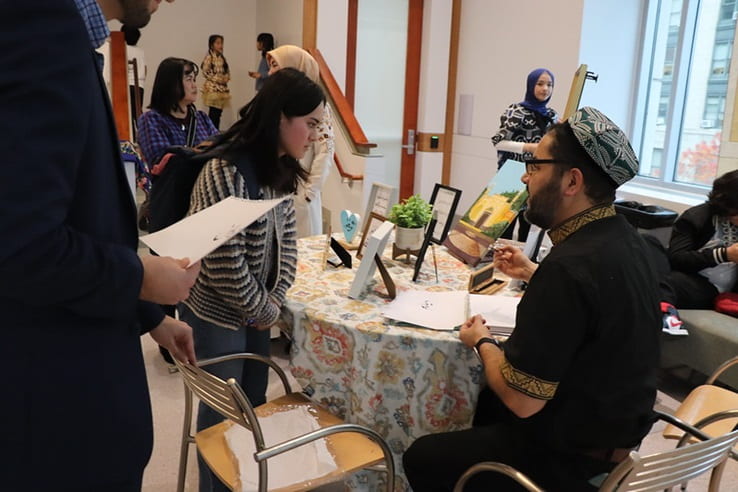
On October 25, the Elliott School welcomed back alumni and families of current students for an open house as part of GW’s Alumni & Families Weekend 2025: A Celebration of the ’90s. More than three hundred visitors came to the Elliott School to meet the dean, faculty, and staff; admire a student photo exhibition; and attend faculty-led “express” lectures. A popular highlight of the open house was the chance to meet Dean Alyssa Ayres, who was available on the second-floor atrium for questions, conversations, and photos. A collection of photos can be found here.

The activities for families included express lectures showcasing Elliott faculty, where parents could experience firsthand how and what their students are learning. Three Elliott professors shared their expertise and teaching style through short presentations on a variety of subjects. Professor Scott Pace commenced the lectures with “Human Space Exploration in the 1990s—Space Shuttle and Beyond,” followed by Professor Celeste Arrington’s lecture on “Advances in Disability Rights and Law in South Korea and Japan.” Professor Bob Orttung concluded the express lectures by exploring “Northern Sweden’s Rapid Industrial Transition.” In the words of Dean Ayres, these lectures “demonstrated our hallmark scholarship with impact in areas as diverse as space policy, legal reform in Japan and Korea, and economic change in northern Sweden.”

Another special feature of the open house was the photo exhibition with the theme “Moments that Inspire.” Dean Ayres said, “We were able to offer our Elliott families and alumni a glimpse of our students’ travels and inspirations, all on display in the student photo exhibition installed throughout our atrium.” The 37 photographs on display were captured by 21 students, of whom 14 are on the path to a Bachelor of Arts degree and seven are pursuing master’s degrees. Photo subjects ranged from the mountains of Norway to a camel sitting by the Pyramids of Giza. The exhibition will remain on display until the end of the fall semester, so be sure to stop by!

Overall, the Elliott open house was a great success. It was a thrill to bring back former students and the families of current students all in one event to showcase how Elliott is doing in the present. Dean Ayres recounted the open house as “a great way to welcome more members to our growing Elliott School community!”

The Evolving Role of Sports Diplomacy in a Complex World

By Jeneva Pace

Speaker, Chineze "Chinny" Nwagbo

In an increasingly intricate geopolitical landscape, the intersection of sports and foreign policy is more critical than ever. To kick off the fall semester, Elliott School Graduate Student Services (GSS) hosted a distinguished panel to explore the evolving role of sports in diplomacy. The event offered students new perspectives, particularly as the United States prepares to host a historic number of major international sporting events, including the LA28 Olympics, the 2026 FIFA World Cup, and the Rugby World Cup. These events position sports diplomacy as a powerful tool for fostering economic growth and cultural exchange over the coming decade.

Our timely and impressive panel featured:

  • Chineze “Chinny” Nwagbo: A former Division I and professional basketball player, now an International Sports Envoy with the U.S. Department of State and formerly with the NFL Players Association.
  • Travis Smith Parker: CEO and Founder of Center Circle Sport, and former Director of the Institute of Sport and Social Justice.
  • Alex Sopko: Director of Government Relations and Public Engagement for the 2026 FIFA World Cup.
  • David Francis: Vice President for Global Growth Strategy & Government Affairs at JETR Global Sports + Entertainment.
  • Travis Murphy: CEO and Founder of JETR Global Sports + Entertainment.

The discussion was expertly moderated by Desiree Filippone of United Sports Advisors, a longtime sports diplomat who recently founded her own consulting firm after a 15-year tenure as vice president of governmental relations for the U.S. Olympic and Paralympic Committee.

The panel explored how sports diplomacy is moving beyond traditional “soft power” and leveraging its full potential to address pressing global challenges, from human rights to climate change. A key theme was “Commercial Sports Diplomacy,” a strategic approach that explicitly incorporates economic objectives—such as expanding trade and attracting investment—alongside cultural exchange and building goodwill. Panelists highlighted how upcoming sporting events in the Americas offer a chance for the U.S. government to engage in this form of diplomacy, strengthening international partnerships and fostering cross-cultural collaboration.

The conversation delved into the tangible economic benefits for host nations and regions, such as increased tourism and infrastructure investment. Panelists discussed how industries can strategically align with these major moments to drive economic growth and enhance cultural capital. Students also engaged the panel with questions on challenging topics like “sportswashing” and the increasingly intertwined relationship between international sports and social and political issues. The panel also explored the challenges of their work while showcasing career opportunities at all levels in both the public and private sectors, including internships and full-time roles within their organizations.

Drawing upon their diverse backgrounds in both public and private sectors, each panelist offered insights into building cross-cultural understanding, fostering dialogue between nations, and leveraging sports to drive positive change. Their careers illustrated the dynamic overlap and career paths available within the field of sports diplomacy. Elliott students interested in the international opportunities sports marketing offers were impressed by the caliber of the speakers and the chance to meet and network with them. 

GW’s Public Interest Technology Scholars Will Raise the Bar on Conversations about Tech and Civic Interest

GW's Professors Gate

Elliott School’s Susan Ariel Aaronson, CCAS’s Alexa Alice Joubin and SMPA’s David Karpf comprise the university’s inaugural PIT Scholars cohort.

Authored by: Ruth Steinhardt

GW Professor's Gate

The George Washington University introduced its Public Interest Technology (PIT) Scholars program this week, supported by the Office of the Vice Provost for Research,  demonstrating an ongoing commitment to the study and application of technology that advances the public good by recognizing and empowering scholars contributing to that work. Three GW faculty members were named to the inaugural PIT Scholars cohort:

As PIT Scholars, Aaronson, Joubin and Karpf will facilitate cross-disciplinary research and teaching, seek new collaborations at GW and beyond and deliver a university-wide lecture. Their work also will raise awareness of the Public Interest Technology University Network (PIT-UN), of which GW has been a member since 2020.

“GW faculty can play an important role in facilitating technology in the public interest through research, education and service,” Vice Provost for Research Pamela Norris said. “In fact, there are many opportunities for GW to combine our historical strengths in fields like law, policy and international affairs with technology innovation to grow a new generation of civic-minded technologists and digitally fluent policymakers.”

At the PIT Scholars launch event in Science and Engineering Hall Wednesday afternoon, faculty from a range of disciplines gathered to discuss the definition of PIT, the opportunities and challenges its development presents and how to stimulate the collaboration necessary to promote it. Each of the three scholars gave a brief presentation on their ongoing PIT-related projects, as did Zoe Szajnfarber, director of strategic initiatives for the School of Engineering and Applied Science and professor of engineering management and systems engineering, and of space policy. Jack Goodman, a senior associate at government relations firm Lewis-Burke Associates, also presented on the range of federal funding available for PIT-related initiatives.

PIT is almost inherently interdisciplinary, speakers suggested, depending as it does on a variety of perspectives regarding both what the “public interest” or “civic good” actually is and also how a given product or initiative could affect that interest. Technology developed from a single disciplinary viewpoint, even with the best of intentions, may have unintended but major consequences in another arena.

Aaronson encouraged attendees to be “Johnny Appleseeds,” spreading the word about PIT and its potential in their own departments, and reminded the audience that TRAILS—the stated mission of which is to ensure the participation of diverse stakeholders in AI development so that future AI systems enhance human capacity, respect human dignity and protect human rights—opens its 2024 application season in April. “We are really eager to see proposals from people in departments that are traditionally underrepresented,” she said.

Karpf, currently on sabbatical, is working on a book based on his reading of the entire back catalogue of “Wired” magazine. Digital boosterism can have a distorting effect, he said, leading public enthusiasm—and research, in its wake—from one big idea to the next without evaluating the impact of previous zeitgeists. “I want to capture some sense of the stories that we tell ourselves about how our technologies change the world, and what we can learn from looking at contemporaneous predictions,” he said.

And, Karpf joked, “as somebody who spent the past six years sitting around reading old tech magazines and designing a class around old tech magazines,” he also appreciates the way the PIT Scholars program gives him a “deeply appealing” opportunity to “help build a community where that [work] is of some strange use.”

Joubin, who is working on multiple projects examining the interplay of technology, language, culture and the public interest, spoke passionately about the importance of involving humanities and arts scholars in conversations about tech, and vice versa. The written word, she pointed out, is itself a form of technology that no current scholarship has bettered. Where technology and the humanities intersect—which, increasingly, is everywhere—these intersections “force us to ask and rethink longstanding questions about moral agency, trustworthiness, the mind and body and the relationship between humans and machines.”

Such questions may seem esoteric, and projects on the borders of PIT may currently seem fringe. But, as Joubin pointed out, knowledge can only advance at the borders of what’s currently known. As PIT Scholars, she and her colleagues can “showcase the value of being atypical.”

“Atypical work is where breakthroughs are possible,” she said. “There is value in being a little bit of a weirdo.”

Elliott Alumni Reflect on Prestigious Presidential Fellowship

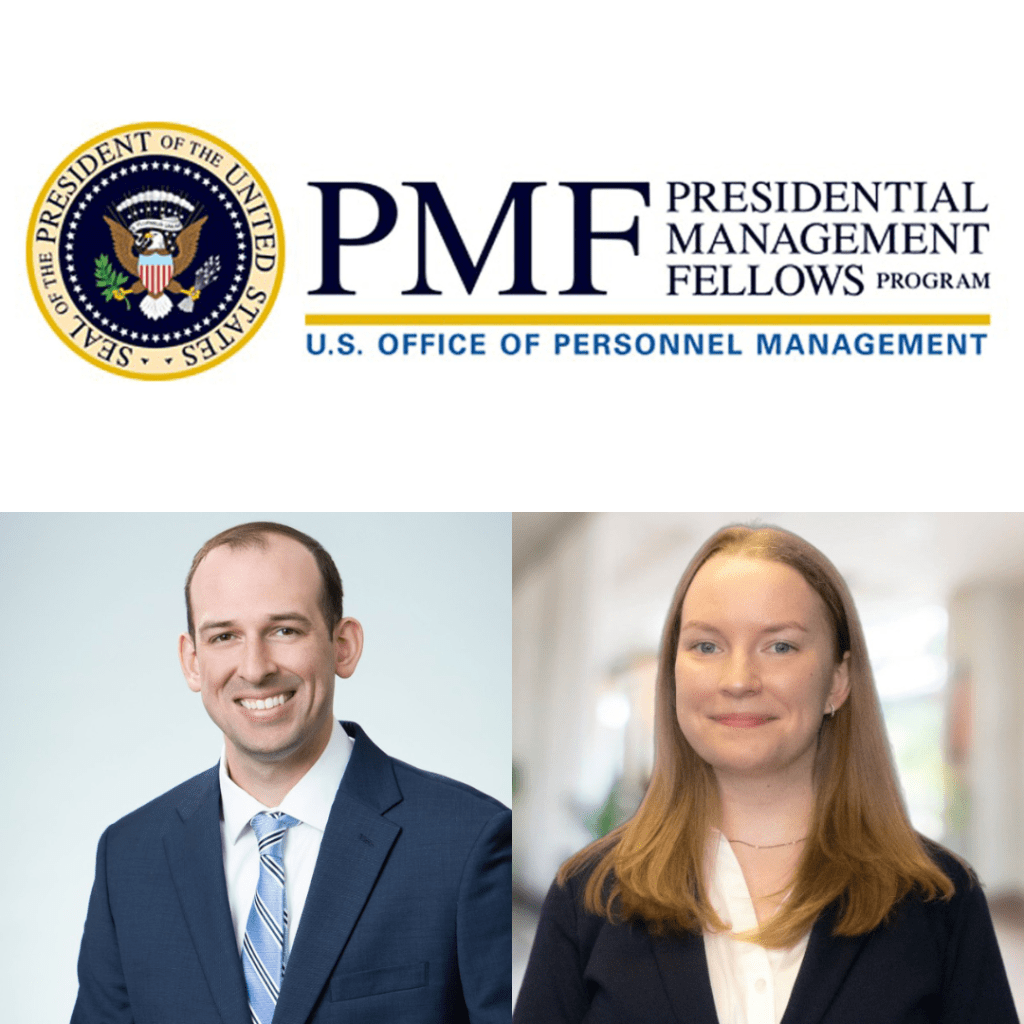
Two PMF Awardees and the PMF logo

The prestigious Presidential Management Fellows (PMF) program is opening doors for Elliott School graduates to turn their academic experience into impactful careers in the federal government.

Administered by the U.S. Office of Personnel Management, the PMF program is designed to recruit and develop the next generation of leaders for the federal workforce. The application process evaluates candidates’ leadership potential, with top candidates selected as finalists. Those finalists then have the opportunity to be appointed as two-year paid fellows at federal agencies.

In addition to the hands-on experience at federal agencies, Presidential Management Fellows receive mentorship from senior government leaders and the chance to drive innovation in public policy spheres.

The Elliott School prepares each new cohort of potential PMFs to master each part of the application process with great detail and prowess. Each year, the Elliott School celebrates having a large group of alumni and second-year students who have earned distinction as PMF Finalists.

Two Presidential Management Fellows, Daria Howard and John T. Lovinggood, shared their experiences working at agencies like the International Trade Administration, Transportation Security Administration, and U.S. Citizenship and Immigration Services through the PMF program.

Howard currently serves as a Digital Outreach Specialist at the International Trade Administration. She was motivated to apply to the PMF program by her desire to pursue a career in public service.

“For me, this meant using my skill set and interests to make others’ lives better,” Howard said. “Another motivation for me and also how I would characterize the program, is community. It’s amazing to be part of such a passionate and talented community, which you’ll continue to be a part of even after the program ends.” 

Howard encourages current Elliott students interested in the PMF program to maintain an unwavering focus on public service.

“Throughout the whole process and beyond, keep public service at the forefront of your mind and at the core of what you do,” Howard said. “It will guide you in the right direction and lead to a meaningful career.”

Lovinggood, who graduated from the Elliott School in 2022, was drawn to the PMF program as a means of continuing his career in public service. As a Presidential Management Fellow, he has held roles at the TSA and USCIS related to critical national security matters.  

Lovinggood reflected on his experience as a PMF and urged eligible Elliott students to apply to the program.  

“It has been a great experience for me that has opened many doors to a fruitful career,” Lovinggood said. “I would recommend to any motivated Elliott Student that there are many opportunities that you may not be aware of, so go ahead and apply!”

Elliott Students Earn Top Prize at Model G20 Summit

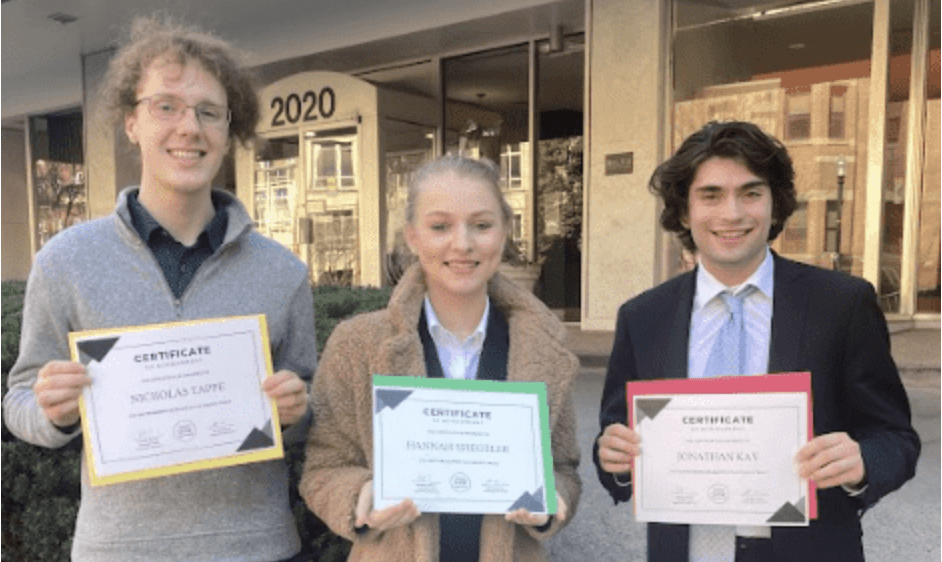
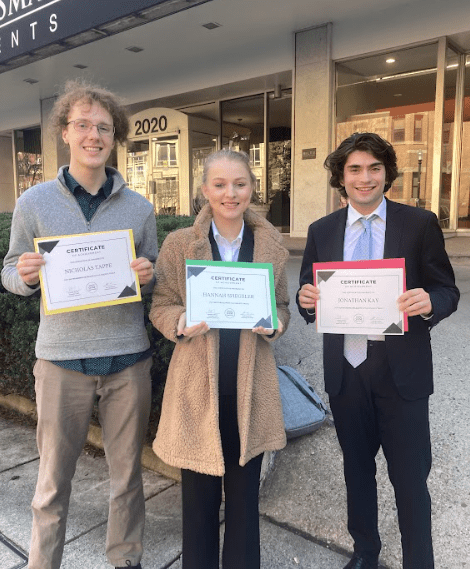
Students holding their awards
Three students holding awards from G20 Summit

GW students won the 2024 Model G20 Summit, beating delegations from universities across the country and earning the “Best Delegation” distinction.

The three-day Model G20 Summit simulates the annual forum where leaders of the world’s largest economies convene. Student delegations represent different countries and negotiate to draft a joint “Communique” detailing policies across major global themes.

“I am incredibly proud of everyone in the GW delegation,” said Hannah Spiegeler, who served as President and led the team to victory. “I knew our skills, cooperation, and talent would lead to success. I wanted to make sure that we won as a delegation – and we did!”

The GW delegation began preparing two weeks before the summit. The delegation researched China’s foreign and domestic policies and prepared talking points, speeches, and policy memos. 

In addition to the team’s overall first-place finish, the members of the GW delegation earned multiple individual awards:

– Nicholas Tappe earned “Outstanding Delegate” (2nd place) in the Sherpa Track

– Jonathan Kay received the “Outstanding Delegate” honor in the Finance Track  

– Hannah Spiegeler was named “Best Delegate” in the Leaders’ Track

Elliott Senior Jonathan Kay reflected on the professional opportunities stemming from the summit.

“The additional networking opportunities that have come to fruition because of this summit have primarily been networking with other promising young international affairs practitioners who will no doubt wield influence in the future,” Kay said. “I look forward to meeting with some of them again, and I am keeping in touch with some of them.”

Spiegeler echoed the long-term impact of the Model G20 summit.

“I have strengthened my skills in negotiation, research, as well as leadership,” Spiegeler said, “all of which would be very useful in future internships, research positions, or jobs in the field of international affairs.” 

Elliott School’s New Data Literacy Initiative: Revolutionizing Policy through Evidence-Based Approaches

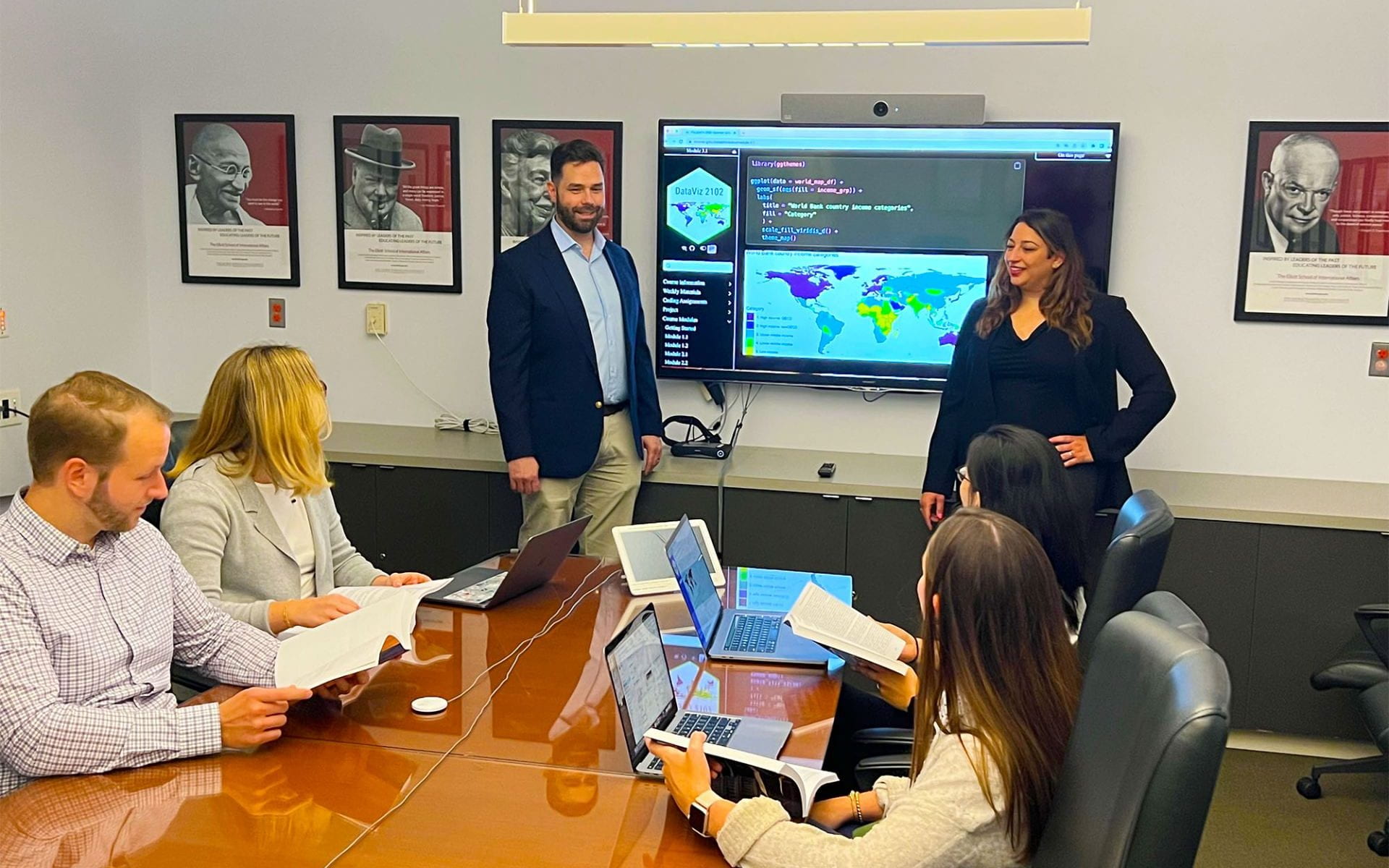
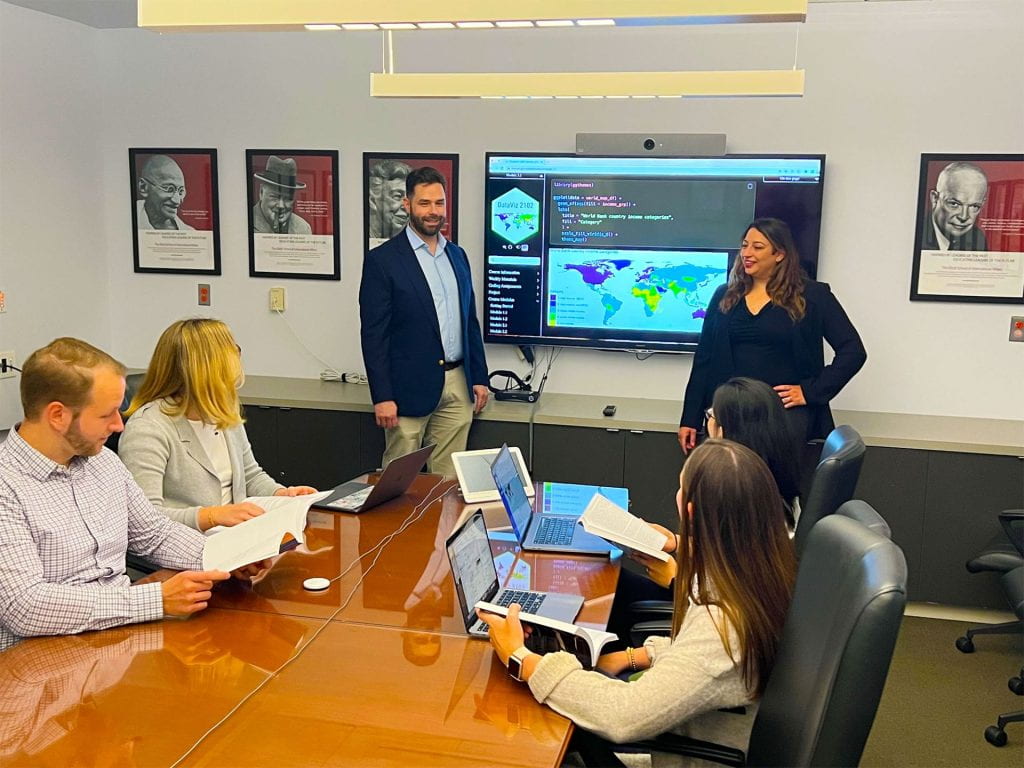
Professors making presentation to staff in conference room.

Professors making presentation to staff in conference room.

Professors Emmanuel Teitelbaum and Laila Sorurbakhsh discuss data visualizations with Elliott School graduate students and International Affairs practitioners: (left to right) Chris Markiewicz, Chiara Evelti, Uugangerel Bold, and Briana Doyle. 

The Elliott School is excited to announce the launch of a new initiative, Data Analytics for Policy Professionals, beginning Fall 2023. Led by Dr. Laila Sorubakhsh and Dr. Emmanuel Teitelbaum, the aim of the initiative is to provide a much-needed bridge between the world of public policy, international affairs, and data analytics. While traditional policy practice may focus more on qualitative or contextual data, the use of quantitative data in reports, presentations, dashboards, and other media are becoming increasingly common in the policy space. Through Data Literacy in International Affairs, our goal is to cross-train both traditional analysts and data scientists to combine their analytic strengths to inform innovative approaches to evidence-based policy.

As part of the initiative, the Elliott School is offering a series of courses at the undergraduate, graduate, and executive level that provide an understanding of which tools are most useful for both specialized and everyday policy practice. Through partnership with organizations and agencies, we seek to better serve our student body and the greater policy community by upskilling our current and future policymakers to respond to a dynamically changing world. These courses will provide students the opportunity to become empowered with the relevant data tools to improve daily operations, better understand policy, and provide evidence-based recommendations for best policy practice.

At the executive level, students, alumni, and practitioners can sign up to take our 1.5 credit weekend workshops offered both in person and online. Credits can be transferred to an Elliott School Masters program or graduate certificate. Fall 2023 offerings include IAFF 6505 Visualizing and Modeling International Politics with Dr. Emmanuel Teitelbaum (ESIA) and IAFF 6505 Expert Policy Decision Making Using Data with Dr. Leonardo Antenangeli (ESIA) and Dan Spokojny (CEO, fp21).  Our hands-on approach combines technical training with guest speakers and networking events to put new technical skill sets into practice.  Classes are open to beginners with no-coding experience to seasoned analysts looking to add to their skill set or understanding of its applications to the policy world. Information about the courses can be found in more detail here. 

The introductory fall 2023 class will receive a special offer for the Initiative’s launch: $1,500 per 1.5 credit workshop in lieu of the standard non-degree student rate of $2,080 per 1 credit.

To apply, please submit your application here .  Applications are considered on a rolling basis depending on workshop timing.

For any questions, please reach out to sorurbakhsh@gwu.edu

For additional information on the course offerings, please visit our website at https://elliott.gwu.edu/data-analytics-policy-professionals


GW Elliott School receives $1 million gift to advance contemporary China studies

Dean Alyssa Ayres with David Gitter, ESIA ’15, at the Elliott School in June 2023.

The Elliott School of International Affairs has received a $1 million endowed gift from the Center for Advanced China Research, a Washington DC think tank founded by David Gitter, ESIA MA ’15, to advance contemporary China studies. Resources from the David A. Gitter Endowment for Contemporary China Studies will create an annual fellowship for immersive language study in the People’s Republic of China. 

The endowment also enables the school to expand course offerings focused on contemporary (post-1949) China.

GW’s prominent Sigur Center for Asian Studies, situated at the Elliott School, will oversee the use of resources provided by the new endowment. The Sigur Center draws on the expertise of 60+ faculty throughout GW whose reputation has helped the university to have the only East Asia National Resource Center in Washington, D.C.

“This exceptional gift recognizes the field-defining work that the Sigur Center for Asian Studies is doing, and it will strengthen our offerings for students focused on China,” said Dr. Alyssa Ayres, dean of the Elliott School.

While a graduate student in Asian studies, David Gitter took full advantage of GW resources. These included the China Documentation Center (CDC), part of Gelman Library’s special collections. The CDC is widely known as one of the premier Chinese language collections in the world.

The hours that Gitter spent with the collection’s Chinese-language books and journals helped to shape his conviction that “advanced proficiency in the Chinese language, both written and spoken, is essential to a true understanding of Chinese culture, history, and politics.” 

Gitter also has lived, worked, and studied in Beijing. As an expert on contemporary China, he has first-hand knowledge of the major role that the Chinese language plays in helping professional China-watchers make sound assessments and offer informed advice. Accordingly, the central purpose of the Gitter Endowment is to enable Elliott School graduate students with a focus on China to undertake immersive instruction in Mandarin where it is spoken.

 “The People’s Republic of China is a major world power and of extreme importance to the United States,” Gitter said. “I want this endowment to help American scholars and practitioners acquire a deep and granular understanding of the PRC.”

Gitter founded the Center for Advanced China Research after graduating from the Elliott School in order to advance US understanding of China’s domestic politics, foreign affairs, and security policy. The organization quickly became an important resource for China specialists and media outlets. The David A. Gitter Endowment for Contemporary China Studies will extend the center’s work and secure its legacy.

 “Given China’s role on the world stage, there is a critical need for a new cadre of experts who understand contemporary China—and are proficient in Mandarin,” Dean Ayres said. 

“We also look forward to bringing experts to campus to teach new courses that will broaden understanding of the geopolitical, geoeconomic, and cultural aspects of modern-day China.”

Elliott Undergraduate Research Fellow Presents at Arctic Science Summit

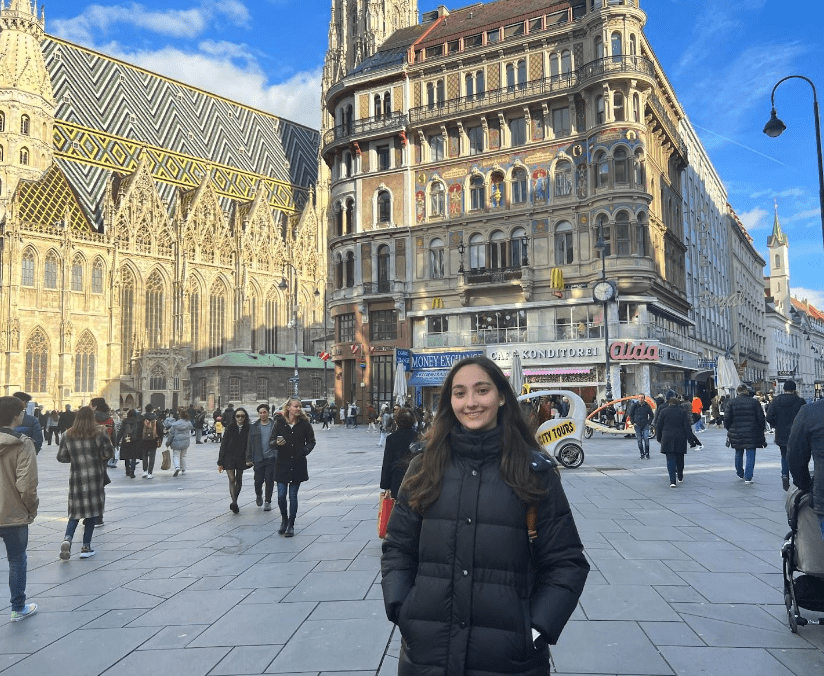
Anissa Ozbek

Anissa Ozbek, a third-year student in the Elliott School of International Affairs and an undergraduate research fellow, traveled to Vienna, Austria, this February with the GW delegation to the 2023 Arctic Science Summit Week. There, joined by Professor Marya Rozanova-Smith she presented findings from the COVID-GEA Project, which seeks to understand the gendered impacts of COVID-19 in the Arctic. 

“I have been a research assistant on the project since 2022, so I was very excited to share the COVID-GEA Project’s preliminary results alongside our Principal Investigator, Dr. Rozanova-Smith at the Arctic Science Summit Week(ASSW) before world-class scholars in the field of Arctic studies,” said Ozbek. 

Ozbek’s topic, “Gender Equality for Sustainable Arctic Communities Amid and Beyond the COVID-19 Pandemic,” focused specifically on the case of Alaska, examining initiatives passed in Fairbanks, Anchorage, Nome, and Juneau, as well as by the Alaska state legislature. 

At the conference week, Ozbek assisted Dr. Rozanova-Smith in presenting the COVID-GEA project’s audio-visual exhibit, titled “Arctic Women’s Voices:Standing Strong in the Face of COVID-19,” which gives Arctic women a platform to discuss how the pandemic affected them.

Conference attendees at the ASSW heard from experts across the natural and social sciences on a range of topics, from the effects of light pollution on Arctic ecosystems to Indigenous stewardship practices. 

As Ozbek considers a career in research, attending the ASSW provided her with the invaluable opportunity to learn about key aspects of scholarship, including presentation skills and collaboration, firsthand.

GW Elliott School Receives Anonymous Gift

Speakers and guests gather during the “International Conference on Preservation of Uyghur Studies,” hosted by the Elliott School (in partnership with the U.S. Institute of Peace and the Uyghur Academy) in December 2022.

Strengthens Uyghur Studies

The Elliott School of International Affairs has received one of the largest gifts in recent years, a $900,000 anonymous donation that will enhance the school’s Uyghur Studies Initiative, to be headquartered at the school’s Sigur Center for Asian Studies.

The George Washington University is one of the leading institutions in the United States for research and teaching on Uyghur studies, with two full-time faculty members—professors Eric Schluessel, a historian, and Sean Roberts, a cultural anthropologist—working in this academic space. 

The donor, a scholar who wishes to advance the study of Uyghur history and culture, recognized GW’s prominence in this academic area and decided to offer significant philanthropic support to the Uyghur Studies Initiative.

“This exceptional gift recognizes the field-defining work that Professors Schluessel and Roberts are doing, as well as our school’s long history of engaging closely with the Uyghur diaspora,” Elliott School Dean Alyssa Ayres said.

More than 11 million members of the Uyghur community live in the Xinjiang region in northwestern China, and they are under duress. Articles in the mainstream press often highlight what Schluessel explains is “a systematic campaign of human right abuses in Xinjiang, directed at Uyghurs and other Muslim-majority groups.”

Less visible, however, is the Uyghur people’s rich intellectual history—and the danger that much of this knowledge will be lost as Uyghur scholars’ voices are silenced. Some scholars who have spoken out in China are now in prison, while others have been forced to flee. In the U.S., the Washington area has become home for a number of these displaced scholars.

The Elliott School has been actively engaged with the Uyghur diaspora in the U.S. for nearly a decade. In 2014, the school’s Central Asia Program, directed by Research Professor Marlene Laruelle, organized GW’s first major conference on Uyghur culture; there have been several subsequent conferences, and these important forums will continue.

Uyghur studies also are increasingly popular among students. A recent class on Uyghur history, for example, reached capacity almost immediately. Other classes at the Elliott School have addressed Uyghur issues as they relate to global development, including “Indigenous Peoples, Ethnic Minorities, and Development” and “The Belt and Road Initiative: China’s Approach to International Development.”

According to Sigur Center Director Gregg Brazinsky, the Uyghur Studies Initiative is a substantial complement to the school’s popular programming on China, Taiwan, and Tibet. The Sigur Center has been recognized by the U.S. Education Department as a National Resource Center in East Asia, the only school in Washington with this distinction.

“Thanks to this generous gift, the Elliott School will be able to further enhance its standing as the best place to study China and the Uyghurs in the Washington area,” Brazinsky said.

Specifically, this timely gift will enable the Elliott School to develop additional courses focused on Uyghur culture and identity, as well as to expand faculty research into these topics. As the initiative gains momentum, the Elliott School plans to bring larger numbers of Uyghur scholars, writers, and activists to campus.

“We are very grateful to the donor for this catalytic gift,” Dean Ayres said.

_____________________________________________________________________________

Would you like to support the Uyghur Studies Initiative at GW’s Elliott School? Your gift of any size will make a significant difference! Please contact Joseph Strodel Jr. at jstrodel@gwu.edu for information on how to direct your gift to this important area of study.