Tuesday, April 16th, 2024
Elliott School of International Affairs
City View Room
The Institute for International Economic Policy is pleased to invite you to the annual GW India Conference on India’s Economic Development and U.S.-India Economic Relations. This year’s conference will focus on “Making India an Advanced Economy by 2047: What Will it Take” and will feature numerous esteemed individuals and notable speakers. Breakfast, lunch, and coffee included.
This conference is co-sponsored by the Institute for International Economic Policy, the Institute for International Science and Technology Policy, the GW Center for International Business Education and Research, and the Sigur Center for Asian Studies.
Conference Agenda
8:30-9:00 a.m. – Breakfast and Registration
9:00-9:05 a.m. – Welcome Remarks
James Foster, Carr Professor of International Affairs and Professor of Economics, GWU
9:05-10:15 a.m. – Opening Keynote Session
Chair: Alyssa Ayres, Dean, Elliott School of International Affairs
Thematic Address: Indermit Gill, Chief Economist, The World Bank, “How Can India Avoid the Middle-Income Trap?”
Keynote Address: V. Anantha Nageswaran, Chief Economic Advisor, GOI, “India’s Path to An Advanced Economy: Growth and Structural Transformation”
10:15-11:15 a.m. – Session 1: “India Macroeconomic Imperatives in a Post-Pandemic World”
Chair: Ajay Chhibber, IIEP Distinguished Visiting Scholar, GWU
Speaker: Sajjid Chinoy, J.P.Morgan, and Member, PM’s Economic Advisory Council
Discussant: Prachi Mishra, Chief, Systemic Issues Division, IMF
11:15-11:30 a.m. – Coffee break
11:30 a.m.-12:30 p.m. – Session 2: “India’s Trade Policy and the Global Environment”
Chair: Atman Trivedi, Partner, Albright Stonebridge Group
Speaker: Arun Kumar, former Assistant Secretary of Commerce, USA and former Head, KPMG, India
Discussants: Judith Dean, Professor of International Economics, Brandeis University
12:30-1:30 p.m. – Lunch Keynote Session
Chair: Scott Pace, IISTP and SPI Director, GWU
Lunch Speaker: Dr. Vivek Lall, Chief Executive, General Atomics Global Corporation, on “U.S.-India Technology and Defense Cooperation”
1:30 p.m.-2:30 p.m. – Session 3: “Reducing Inequality and Eliminating Poverty”
Chair: James Foster, GWU
Speaker: Sabina Alkire, Director, Oxford Poverty and Human Development Initiative
Discussants: Nandini Krishnan, Lead Economist, Poverty and Equity, South Asia, The World Bank.
2:30-3:30 p.m. – Session 4: “Social Inclusion and Empowerment”
Chair: Deepa Ollapally, Research Professor of International Affairs, GWU
Speaker: Prerna Singh, Mahatma Gandhi Associate Professor of Political Science and International and Public Affairs, Brown University
Discussant: Irfan Nooruddin, Hamad bin Khalifa Al Thani Professor of Indian Politics, Georgetown University
3:30-3:45 p.m. – Coffee Break
3:45-4:45 p.m. – Session 5: “Climate Change: India’s Pathways and Challenges”
Chair: Maureen Cropper, Distinguished University Professor, University of Maryland
Speaker: Mekala Krishnan, Partner, McKinsey Global Institute
Discussants: Stephane Hallegate, Senior Climate Change Advisor, The World Bank
4:45-5:30 pm – Closing Session: “Pathways to India’s Progress: Breaking the Mould”
Chair: Vivek Arora, Deputy Director, Independent Evaluation Office, IMF
Speaker: Raghuram Rajan, Katherine Dusak Miller Distinguished Service Professor of Finance, Chicago Booth, and 23rd RBI Governor
5:30-6:30 pm – Reception:
Remarks by Junaid Kamal Ahmad, Executive Vice President of MIGA
About the Keynote Speaker
 Dr. V. Anantha Nageswaran serves as the Chief Economic Advisor to the Government of India. He wrote a weekly column for Mint for 15 years, as well as co-authored four books. Prior to his current role, Dr. Nageswaran was a part-time member of the Economic Advisory Council to the Prime Minister of India for 2 years and is an honorary senior advisor to the International Financial Services Authority of India. Between 1994 to 2011, he held several positions including Currency Economist at the Union Bank of Switzerland, Head of Research and Investment Consulting in Credit Suisse Private Banking in Asia, and Head of Asia Research and Global Chief Investment Officer at Bank Julius Baer. He graduated from the Indian Institute of Management, Ahmedabad with a Masters in Business Administration and received his PhD in Finance from the University of Massachusetts in Amherst.
About the Thematic Address

Indermit Gill is Chief Economist of the World Bank Group and Senior Vice President for Development Economics. Before starting this position on September 1, 2022, Gill served as the World Bank’s Vice President for Equitable Growth, Finance, and Institutions, where he helped shape the Bank’s response to the extraordinary series of shocks that have hit developing economies since 2020. Between 2016 and 2021, he was a professor of public policy at Duke University and non-resident senior fellow at the Brookings Institution’s Global Economy and Development program. Gill led the World Bank’s influential 2009 World Development Report on economic geography. His work includes introducing the concept of the “middle-income trap” to describe how countries stagnate after reaching a certain level of income. He has published extensively on key policy issues facing developing countries—among other things, sovereign debt vulnerabilities, green growth and natural-resource wealth, labor markets, and poverty and inequality. Gill has also taught at Georgetown University and the University of Chicago. He holds a Ph.D. in economics from the University of Chicago.
About the Session Speakers
Sajjid Z. Chinoy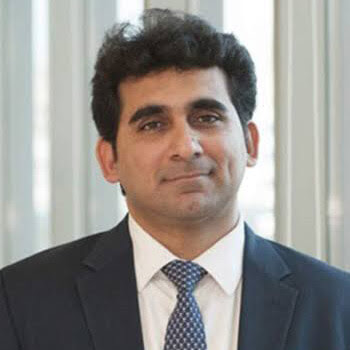 is J.P. Morgan’s Chief India Economist and also serves on the Advisory Council to the 15th Finance Commission set up by the Government of India. He has previously worked at the International Monetary Fund (IMF) and McKinsey & Company. He has also previously served as a member of the RBI’s “Expert Committee to Revise and Strengthen the Monetary Policy Framework” that proposed inflation targeting in India, was a consultant to the FRBM Review Committee set up by the government to proposed a new fiscal anchor, and a member of the Indian Banks Association (IBA) Monetary Policy Group. Since 2014, he has been ranked as one of the “Best Individuals in Research in India” by Asset Magazine. He has authored several publications on the Indian economy including co-editing a book on Indian economic reform: “Reforming India’s External, Fiscal and Financial Policies” with Dr. Anne O. Krueger. He received his Ph.D. in economics at Stanford University in 2001.
Arun Kumar 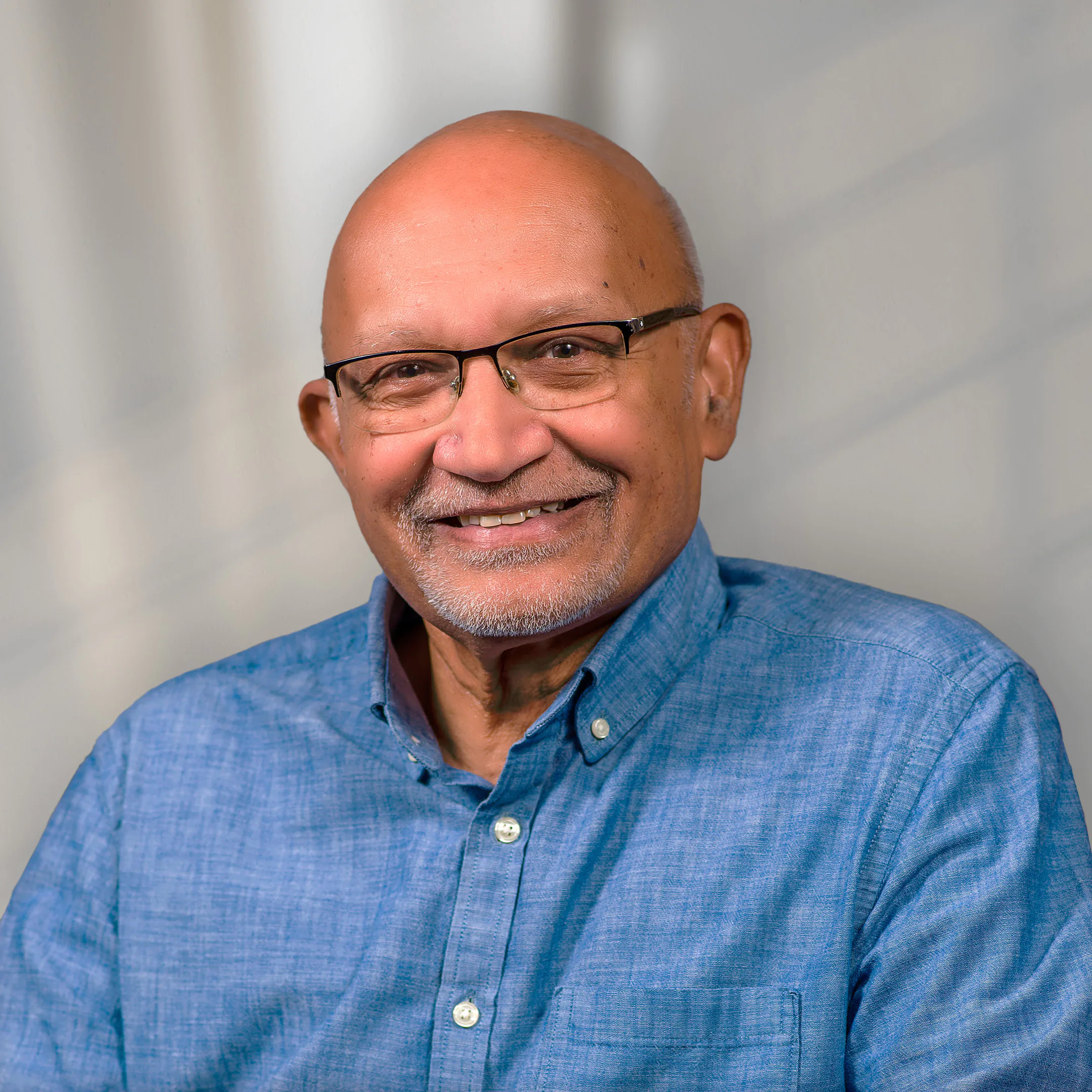.webp) most recently served as the Chairman and CEO of KPMG in India, an organization consisting of several thousand professionals engaged in providing assurance, tax, and advisory services. He was a member of the global board of directors of KPMG. He previously served in President Obama’s Administration as Assistant Secretary of Commerce for Global Markets and Director General of the U.S. & Foreign Commercial Service (USFCS). As the Administration’s lead official to promote U.S. exports, foreign direct investment, and enhanced market access around the world, he led a team of 1,700 professionals in 78 countries and all 50 United States. Prior to his stint in Washington, DC, Arun was a partner and a member of the board of KPMG LLP in the US. Based in Silicon Valley, he led KPMG’s Management Consulting practice in the West for many years. He has also been a company mentor and entrepreneur in Silicon Valley. Arun is a member of the Council on Foreign Relations. He is the author of The Global Trade Paradigm (HarperCollins, 2023) as well as two books of poetry.
most recently served as the Chairman and CEO of KPMG in India, an organization consisting of several thousand professionals engaged in providing assurance, tax, and advisory services. He was a member of the global board of directors of KPMG. He previously served in President Obama’s Administration as Assistant Secretary of Commerce for Global Markets and Director General of the U.S. & Foreign Commercial Service (USFCS). As the Administration’s lead official to promote U.S. exports, foreign direct investment, and enhanced market access around the world, he led a team of 1,700 professionals in 78 countries and all 50 United States. Prior to his stint in Washington, DC, Arun was a partner and a member of the board of KPMG LLP in the US. Based in Silicon Valley, he led KPMG’s Management Consulting practice in the West for many years. He has also been a company mentor and entrepreneur in Silicon Valley. Arun is a member of the Council on Foreign Relations. He is the author of The Global Trade Paradigm (HarperCollins, 2023) as well as two books of poetry.
 Dr. Vivek Lall is the Chief Executive of General Atomics Global Corporation based in San Diego, California. GA and affiliated companies operate on five continents. The company produces a series of unmanned aircraft (Predator/Reaper/Guardian), produces electro-magnetic aircraft launch and recovery systems, satellite surveillance, electro-magnetic rail gun, high power laser, hypervelocity projectile, and power conversion systems, is the principal private sector participant in thermonuclear fusion research through its internationally recognized DIII-D Facility.
GA is also a leader in development of next-generation nuclear fission and high-temperature materials technologies. Lall has been appointed to the following Boards: Advisory Board of the Quad Investors Network, United States Technical Team member to the NATO STO (Science and Technology Organization),Industry Advisory Board of the American Society of Mechanical Engineers (ASME),International Advisory Group of the US Chamber of Commerce, Board of Directors of US Japan Business Council, Global Board of Directors of the US India Business Council, Senior Advisor to the Center for Commerce and Diplomacy at the University of California San Diego, Board of the Center for Advancing Global Business at San Diego State University and US Cabinet Secretary heading Department of Transportation. Lall served as Vice President of Aeronautics Strategy and Business Development at Lockheed Martin, Chief Executive of U.S. and International Strategic Development at General Atomics Electromagnetic Systems and held leadership roles with The Boeing Company where he was appointed as Vice President and India Country Head, Boeing Defense Space & Security.
In addition, he has worked as an adjunct faculty member at Embry- Riddle, McConnell Air Force Base, served as the founding Co-Chair of the US-India Aviation Cooperation Program and prior to Boeing he worked for Raytheon and conducted research with NASA Ames Research Center in various multidisciplinary engineering fields. Lall was also a special advisor to the United Nations in New York in broadband and associated cyber security issues. He earned a Bachelor of Mechanical Engineering degree from Carleton University in Canada, a Masters of Aeronautical Engineering degree from Embry-Riddle Aeronautical University in Florida, his Ph.D. in Aerospace Engineering from Wichita State University in Kansas, his MBA from City University in Seattle and has completed management and executive courses at the American Management Association in Washington DC.
He was also conferred the President’s Lifetime Achievement Award by the President of the United States of America in September 2022, conferred the “World Leader Award” by the House of Lords in the United Kingdom in 2023 and the Golden Peacock award by the Institute of Directors (IOD) at United Arab Emirates in 2024. He is also an Ambassador of the State of Arkansas and a Kentucky Colonel which is the most well-known US colonelcies conferred to several past US Presidents. He was granted the Grand Cross by His highness Mahmoud Salah Al Din Assaf and Cambridge (UK) has listed him as one of only 2000 Outstanding Scientists of the Twentieth Century as well was President of the Mathematical Association of America. He has authored over hundred articles in various journals. He was also trained as a private pilot at the Phoenix International Flight Training Center in Florida.
Sabina Alkire directs the Oxford Poverty and Human Development Initiative (OPHI) at ODID. Her research interests include multidimensional poverty measurement and analysis, welfare economics, the capability approach, the measurement of freedoms and human development. Together with Professor James Foster, she developed the Alkire-Foster (AF) method for measuring multidimensional poverty, a flexible technique that can incorporate different dimensions, or aspects of poverty, to create measures tailored to each context. With colleagues at OPHI this has been applied and implemented empirically to produce a Multidimensional Poverty Index (MPI). The MPI offers a tool to identify who is poor by considering the range of deprivations they suffer. It is used to report a headline figure of poverty (the MPI), which can be unpacked to provide a detailed information platform for policy design showing how people are poor nationally, and how they are poor by areas, groups, and by each indicator. Previously, she worked at the George Washington University, Harvard University, the Human Security Commission, and the World Bank. She has a DPhil in Economics from the University of Oxford. She holds a DPhil in Economics, an Msc in Economics for Development and an MPhil in Christian Political Ethics from the University of Oxford.
Prerna Singh  is Mahatma Gandhi Associate Professor of Political Science and International Studies, with appointments in the School of Public Health and the Department of Sociology at Brown University. She has published numerous award-winning books and articles on human development, public health, ethnicity and nationalism. Her first book, How Solidarity Works for Welfare was awarded best book prizes from both the American Political Science and the American Sociological Associations. Singh has been awarded fellowships by the Center for Advanced Study of Behavioral Sciences at Stanford University, the Social Science Research Council, the Andrew Carnegie foundation, the American Academy of Berlin, the Harvard Academy for International and Area Studies, and the American Institute of Indian Studies. She has shared her research with scholarly, policy and popular audiences in over a hundred lectures, including keynote addresses, delivered across twenty different countries.
Mekala Krishnan 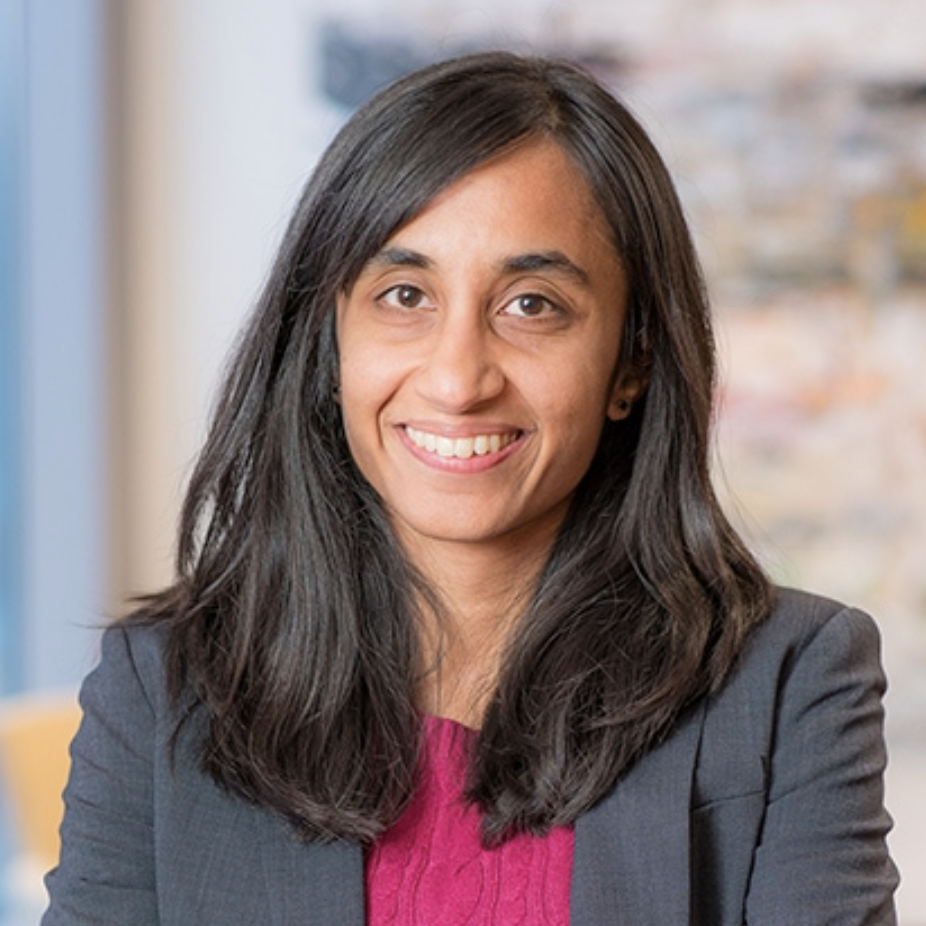 is a partner at the McKinsey Global Institute (MGI), McKinsey’s business and economics research arm. Her research focuses on topics related to sustainable and inclusive growth, including climate risk and the net-zero transition, globalization, productivity growth, and gender economics. Her most recent research focuses on the net-zero transition, adaptation and physical climate risk across sectors and geographies, including its implications for companies and countries. She is an author of the recent MGI reports, The net-zero transition: What it would cost, what it would bring, From poverty to empowerment: Raising the bar for sustainable and inclusive growth, and Climate risk and response: Physical hazards and socioeconomic impacts. Her past research has focused on the risks facing global value chains and the future of globalization. Mekala is a frequent speaker on these topics at global conferences as well as with executives at Fortune 500 companies. She has authored numerous articles and her work has been cited in leading business publications, including The Financial Times, The Wall Street Journal, The Economist, and Harvard Business Review. Mekala serves on a Bretton Woods Committee working group on climate finance and on advisory boards for the Greater Boston Chamber of Commerce and for the Sibley School of Mechanical Engineering at Cornell University. She is also on the board of the Global Fund for Women, a leading public foundation dedicated to improving global gender equality. She was previously a member of a task force at the Hutchins Center on Fiscal and Monetary Policy at Brookings focused on improving productivity measurement. Mekala received her Ph.D. and M.S. degrees in Mechanical Engineering from Cornell University in 2011. Prior to Cornell, she received a Bachelor of Technology degree in Mechanical Engineering in 2006 from the Indian Institute of Technology Delhi.
Raghuram Rajan 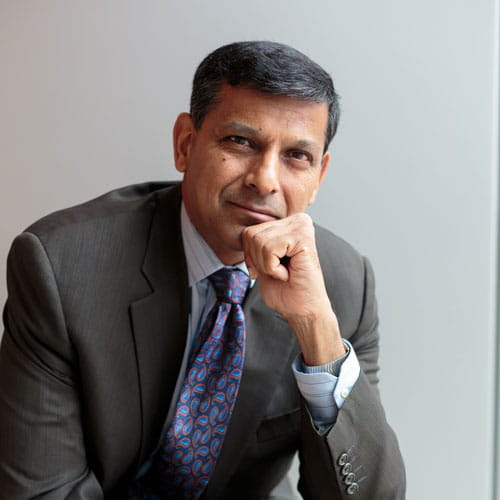 is the Katherine Dusak Miller Distinguished Service Professor of Finance at the University of Chicago’s Booth School. Prior to that, he was the 23rd Governor of the Reserve Bank of India from 2013 to 2016, as well as the Vice Chairman of the Board of the Bank for International Settlements from 2015 to 2016. Dr. Rajan was the Chief Economist and Director of Research at the International Monetary Fund from 2003 to 2006. Dr. Rajan’s research interests range from banking and monetary policy to corporate finance, political economy, communities, and economic development. He co-authored Saving Capitalism from the Capitalists with Luigi Zingales in 2003. He then wrote Fault Lines: How Hidden Fractures Still Threaten the World Economy, for which he was awarded the Financial Times-Goldman Sachs prize for best business book in 2010. In 2019, his book, The Third Pillar: How Markets and the State Leave the Community Behind was a finalist for the Financial Times/McKinsey Business Book of the Year Award. His most recent book, with Rohit Lamba, is Breaking the Mold on reimagining India’s economic future. Dr. Rajan was awarded the inaugural Fischer Black award for the best financial economist under the age of 40 in 2003, the Deutsche Bank prize for financial economics in 2013, the Euromoney Central Bank Governor of the Year in 2014, and Banker magazine’s Global Central Bank Governor of the Year in 2016.
About the Reception Speaker
 Junaid Kamal Ahmad is Vice President of Operations at the Multilateral Investment Guarantee Agency (MIGA), the Political Risk Insurance and Credit Enhancement arm of the World Bank Group (WBG). He is responsible for advancing and enhancing MIGA’s brand partnering across WBG and with financial institutions, private investors, and development actors to originate and pursue meaningful, impact-driven projects. Mr. Ahmad also leads the Operations team of the Agency to deliver on MIGA’s mandate of mobilizing private finance for development projects in emerging markets and developing economies (EMDEs).
Mr. Ahmad, a Bangladeshi national, was previously the Country Director for the World Bank in India. He joined the Bank in 1991 as a Young Professional and worked on infrastructure development in Africa and Eastern Europe. He has since held several management positions, leading the Bank’s programs in diverse regions including Africa, the Middle East and North Africa, and South Asia. Mr. Ahmad served as the Chief of Staff and earlier as Special Assistant to the President of the World Bank Group. During a part of his time at the Bank, Mr. Ahmad was based in Johannesburg and New Delhi and in 2004, he was a core member of the World Development Report: Making Services Work for Poor People.
Throughout his career, Mr. Ahmad has focused on the role of service delivery in building and leveraging state capability and markets towards the goals of economic development and sustainability. In his work, Mr. Ahmad has focused on public finance and federalism and the management of urban governments across diverse country contexts from fragile and conflict settings, low and middle income, to large federations. In addition, he has worked on public-private partnerships in infrastructure sectors and with municipal governments, focusing on the mobilization of private equity and long-term debt from capital markets. As the first Senior Director of the World Bank’s Water Global Practice and the former Country Director for India, Mr. Ahmad initiated and oversaw multi-billion-dollar sector and country programs covering finance, infrastructure, and human development. He is recognized for his strategic leadership of teams to deliver impact at scale.
Mr. Ahmad holds a PhD in Applied Economics from Stanford University, a 2-year MPA from Harvard University and a BA in Economics from Brown University. Prior to joining the World Bank Group, Mr. Ahmad worked in the Planning Commission, Government of Bangladesh, in the areas of trade and industrial policy. Mr. Ahmad has published on fiscal federalism and decentralization and on various aspects of infrastructure reform and service delivery.
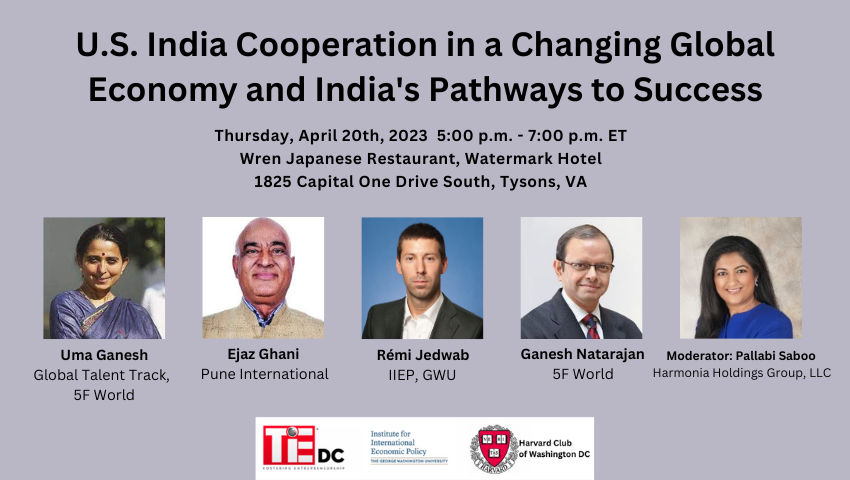
 is an expert in entrepreneurial strategy, skills development, and digital employee management platforms. She is the Founder of Global Talent Track, a leading vocational skills company that uses a blended learning model to bridge academia and the industry. She is the Co-Founder of 5F World, a platform for global consulting, investing, and mentoring in digital skills and digital transformation for start-ups and social enterprises, and has authored multiple books on knowledge, management, and digital success.
 ational. He is a former Lead Economist at the World Bank and former consultant at the International Labour Organization, the United Nations Conference on Trade and Development, and UNICEF. He previously was a Professor of Economics at Oxford University and Delhi University. He is an expert on topics including economic growth, macroeconomic policy, poverty, employment, entrepreneurship, urbanization, gender trade, decentralization, and agriculture.
 is an associate professor of Economics and International Affairs at the Elliott School and the Department of Economics of George Washington University, the Director of the Institute for International Economic Policy and the Director of the ESIA Initiative on Climate Change and Sustainable Cities at George Washington University, and an Affiliated Scholar of the Marron Institute of Urban Management at New York University. Professor Jedwab’s main fields of research are urban and real estate economics, development and growth, environmental economics, and labor economics. Some of the issues he has studied include urbanization and structural transformation, urban construction and climate change, the economic determinants and effects of transportation infrastructure, and the roles of institutions, human capital and technology in development and growth. He is the co-founder and co-organizer of the World Bank-GWU Urbanization and Poverty Reduction Conference and the Washington Area Development Economics Symposium.
 atarajan is the Co-Founder of 5F World, a platform for global consulting, investing, and mentoring in digital skills and digital transformation for start-ups and social enterprises. He is the Chairman of Honeywell Automation India and Lighthouse Communities Foundation, as well as a Central Board Member of the State Bank of India, Global Talent Track, and AVPN Singapore.
 is the Executive Chair and Founder of Harmonia Holdings Group, LLC. She serves on the Fairfax Economic Development Authority Board, Asian American Chamber of Commerce Board, George Mason University President’s Innovation Advisory Council, The Indus Entrepreneurs (TiE) DC Board, Northern Virginia’s Chamber of Commerce Strategic Leadership Board of Advisors, and as an Officer of the Harvard Club of Washington DC. She was named one of the Top 25 Female CEOs in the DMV in 2008 and received the US President’s Volunteer Service Award in 2021


 Dr. Sekhar Bonu joined as the Director General of Development Monitoring and Evaluation Office (DMEO) in April 2019. The Government established DMEO in September 2015 as an attached office of the NITI Aayog to fulfil the monitoring and evaluation mandates assigned to NITI Aayog. Before joining NITI Aayog, Dr. Bonu worked with the Asian Development Bank (ADB) in Manila for 15 years. At ADB, he worked in health, urban infrastructure development and regional cooperation, mainly in South Asia. Dr. Bonu worked in the Indian Administrative Services and served as a civil servant in Rajasthan between 1987-2003, among others, as district magistrate, director of primary and secondary education, chief executive officer of state-owned Enterprises. Dr. Sekhar Bonu has a PhD from Johns Hopkins University and is a Chartered Financial Analyst charter holder. He has a wide range of research and operational interests and has published in peer-review journals.
 Christian Oldiges is a Development Economist, currently serving as Policy Specialist at the Inclusive Growth team of UNDP/BPPS, New York. He brings more than 10 years of experience in the fields of development economics, policy advocacy and social protection. Previously, as Director of Policy Research at the Oxford Poverty and Human Development Initiative (OPHI), University of Oxford, he has been directly involved in developing national MPIs with governments in South Asia and sub-Saharan Africa. In postdoctoral studies at Oxford, he has written about how 270 million people moved out of multidimensional poverty in India within a decade, poverty reduction and its interlinkages with COVID-19, migration, and conflict, as well as on workfare programs and food security in India. He holds a PhD in Economics (Heidelberg University, Germany) and has studied at Hindu College and the Delhi School of Economics, Delhi University.


 Nitin Desai has had a long and distinguished career in the Government of India and the United Nations. He has also worked for some time in private industry and taught at two UK Universities.


 Laveesh Bhandari is a Senior Fellow at CSEP. Laveesh will lead and develop the climate change capability at CSEP. In addition, he will help define the broad macro agenda and advise on the sub-national reform. Dr Bhandari is an economist, entrepreneur and an environmentalist. He is currently the Director of Indicus Foundation and leads its Environment and Sustainable Livelihoods initiative. Laveesh has published widely on subjects related to sustainable livelihoods, industrial, economic and social reforms in India, economic geography and financial inclusion. He received his PhD in economics from Boston University for which he was awarded the Best thesis in International Economics. He has taught economics in Boston University and IIT Delhi. He has been the managing editor of Journal of Emerging Market Finance, and worked at National Council of Applied Economic Research (NCAER), New Delhi. He has built, seeded, and exited from three companies in the research, analytics and digital domain.


 Rohini Pande is the Henry J. Heinz II Professor of Economics and Director of the Economic Growth Center, Yale University. She is a co-editor of American Economic Review: Insights. Pande’s research is largely focused on how formal and informal institutions shape power relationships and patterns of economic and political advantage in society, particularly in developing countries. She is interested in the role of public policy in providing the poor and disadvantaged political and economic power, and how notions of economic justice and human rights can help justify and enable such change. Her most recent work focuses on testing innovative ways to make the state more accountable to its citizens, such as strengthening women’s economic and political opportunities, ensuring that environmental regulations reduce harmful emissions, and providing citizens effective means to voice their demand for state services. In 2018, Pande received the Carolyn Bell Shaw Award from the American Economic Association for promoting the success of women in the economics profession. She is the co-chair of the Political Economy and Government Group at Jameel Poverty Action Lab (J-PAL), a Board member of Bureau of Research on Economic Development (BREAD) and a former co-editor of The Review of Economics and Statistics. Before coming to Yale, Pande was the Rafik Harriri Professor of International Political Economy at Harvard Kennedy School, where she co-founded Evidence for Policy Design. Pande received a Ph.D. in economics from London School of Economics, a BA/MA in Philosophy, Politics and Economics from Oxford University and a BA in Economics from Delhi University.
 Jayati Ghosh taught economics at Jawaharlal Nehru University, New Delhi for nearly 35 years. From January 2020 she will join the University of Massachusetts at Amherst, USA. She has authored and/or edited 19 books (including “Never Done and Poorly Paid: Women’s Work in Globalising India”, Women Unlimited, New Delhi 2009; the co-edited “Elgar Handbook of Alternative Theories of Economic Development, 2014, “Demonetisation Decoded”, Routledge 2017 and “Women workers in the informal economy”, Routledge forthcoming) and nearly 200 scholarly articles. She has received several prizes, including for distinguished contributions to the social sciences in India in 2015; the International Labour Organisation’s Decent Work Research Prize for 2010; the NordSud Prize for Social Sciences 2010, Italy. She has advised governments in India and other countries, including as Chairperson of the Andhra Pradesh Commission on Farmers’ Welfare in 2004, and Member of the National Knowledge Commission of India (2005-09). She is the Executive Secretary of International Development Economics Associates, an international network of heterodox development economists. She has consulted for international organisations including ILO, UNDP, UNCTAD, UN-DESA, UNRISD and UN Women and is member of several international commissions, including the International Commission for the Reform of International Corporate Taxation (ICRICT) and the Commission for Global Economic Transformation of INET. She writes regularly for popular media like newspapers, journals and blogs.
 James E. Foster is the Oliver T. Carr, Jr. Professor of International Affairs, Professor of Economics, and Co-Director of the Institute for International Economic Policy at the George Washington University. He is also a Research Associate at the Oxford Poverty and Human Development Initiative at Oxford University. Professor Foster’s research focuses on welfare economics — using economic tools to evaluate and enhance the wellbeing of people. His joint 1984 Econometrica paper (with Joel Greer and Erik Thorbecke) is one of the most cited papers on poverty. It introduced the FGT Index, which has been used in thousands of studies and was employed in targeting the Progresa CCT program in Mexico. Other research includes work on economic inequality with Amartya Sen; on the distribution of human development with Luis Felipe Lopez-Calva and Miguel Szekely; on multidimensional poverty with Sabina Alkire; and on literacy with Kaushik Basu.
 Ajay Chhibber is a Distinguished Visiting Scholar, Institute of International Economic Policy, George Washington University and Non-Resident Senior Fellow, the Atlantic Council, Washington DC. He was earlier Director General, Independent Evaluation Office, Government of India and Distinguished Visiting Professor at the National Institute of Public Finance and Policy (NIPFP), India. He held senior positions at the UN as Assistant Secretary General and Assistant Administrator, UNDP and managed their program for Asia and the Pacific. He also served in senior positions at the World Bank. He has a Ph.D. from Stanford University, a Masters from the Delhi School of Economics. He taught at Georgetown University and at the University of Delhi.
 Bina Agarwal is Professor of Development Economics and Environment at the Global Development Institute, University of Manchester, UK, and former Professor and Director, Institute of Economic Growth, Delhi. She has been President, International Society for Ecological Economics; Vice-President, International Economic Association; President, International Society for Feminist Economics; and held distinguished positions at the Universities of Cambridge, Harvard, Princeton, Michigan, Minnesota, and the New York University School of Law. Dr. Agarwal’s publications include the multiple award-winning book, A Field of One’s Own: Gender and Land Rights in South Asia (Cambridge University Press, 1994), Gender and Green Governance (OUP, 2010) and Gender Challenges (OUP, 2016), a three volume compendium of her selected papers on Agriculture, Property, and the Environment. Her pioneering work on gender inequality in property and land and on environmental governance, has had global impact. Her many awards include a Padma Shri, 2008; book prizes; the Leontief Prize 2010; Louis Malassis Scientific Prize 2017; and the International Balzan Prize, 2017.
 Viral V. Acharya is the C.V. Starr Professor of Economics in the Department of Finance at New York University Stern School of Business (NYU-Stern) and an Academic Advisor to the Federal Reserve Banks of New York and Philadelphia. Viral was a Deputy Governor at the Reserve Bank of India (RBI) during 23rd January 2017 to 23rd July 2019 in charge of Monetary Policy, Financial Markets, Financial Stability, and Research. His speeches while at the RBI will release in the end of July 2020 in the form of a book titled “Quest for Restoring Financial Stability in India” (SAGE Publications India), with a new introductory chapter “Fiscal Dominance: A Theory of Everything in India”. Viral completed Bachelor of Technology in Computer Science and Engineering from Indian Institute of Technology, Mumbai in 1995 and Ph.D. in Finance from NYU-Stern in 2001. Prior to joining Stern, he was at London Business School (2001-2008), the Academic Director of the Coller Institute of Private Equity at LBS (2007-09) and a Senior Houblon-Normal Research Fellow at the Bank of England (Summer 2008). Viral’s primary research interest is in theoretical and empirical analysis of systemic risk of the financial sector, its regulation and its genesis in government-induced distortions, an inquiry that cuts across several other strands of research – credit risk and liquidity risk, their interactions and agency-theoretic foundations, as well as their general equilibrium consequences. He has published articles in the American Economic Review, Journal of Finance, Journal of Financial Economics, Review of Financial Studies, Review of Finance, Journal of Business, Journal of Financial Intermediation, Rand Journal of Economics, Journal of Monetary Economics, Journal of Money, Credit and Banking, and Financial Analysts Journal. He is currently associate editor of the Review of Corporate Finance Studies (RCFS, 2011-) and Review of Finance (2006-), and was an editor of the Journal of Financial Intermediation (2009-12) and associate editor of the Journal of Finance (2011-14).
 Liaquat Ahamed is the author of the critically acclaimed best-seller, Lords of Finance: The Bankers Who Broke the World, about central bankers during the Great Depression of 1929-1932. The book won the 2010 Pulitzer Prize for History, the 2010 Council on Foreign Relations Arthur Ross Gold Medal, and the 2009 Financial Times-Goldman Sachs Best Business Book of the Year Award. Ahamed was a professional investment manager for twenty-five years. He has worked at the World Bank in Washington, D.C., and the New York-based partnership of Fischer Francis Trees and Watts, where he served as chief executive. He is currently a director of the Putnam Funds. He is on the board of trustees of the Journal of Philosophy, the Sun Valley Writers’ Conference and a former trustee of the Brookings Institution and the New America Foundation. He has degrees in economics from Harvard and Cambridge.
 Rakesh Mohan is one of India’s senior-most economic policymakers and an expert on central banking, monetary policy, infrastructure and urban affairs. Most recently he was executive director at the International Monetary Fund in Washington, D.C., representing India, Sri Lanka, Bangladesh and Bhutan, and chairman, National Transport Development Policy Committee, Government of India, in the rank of a Minister of State. He is also a former deputy governor of the Reserve Bank of India. As deputy governor he was in charge of monetary policy, financial markets, economic research and statistics. In addition to serving in various posts for the Indian government, including representing India in a variety of international forums such as Basel and G20, Mohan has worked for the World Bank and headed prestigious research institutes. He is also Senior Advisor to the McKinsey Global Institute and Distinguished Fellow of Brookings India. Mohan has written extensively on urban economics, urban development, Indian economic policy reforms, monetary policy and central banking.